Casinos with Bingo in New Zealand: How Play Works
 Available in US
Learn how online rooms organise bingo sessions, tickets, prize stages and casino features, and how offshore licensing relates to New Zealand players.

Table of Contents
- How Online Bingo Works for New Zealand Players
- Assessing Online Bingo Quality Without a Ranked List
- Bingo Formats, Tickets and Prize Stages
- Bingo Bonuses and Wagering Requirements
- What “Bingo Casino” Means in an Online Setting
- Playing a Bingo Round: Cards, Lines and Marking
- New Zealand’s Online Casino Licensing Transition
- Payments and Banking for Bingo Casino Sites
- How Bingo Fits Alongside Other Casino Games
- Bingo in New Zealand: Round Lengths and Ticket Costs
How Online Bingo Works for New Zealand Players
Online bingo is available to people in New Zealand through rooms licensed offshore. These services offer bingo play over the internet rather than at a physical venue, and the formats available include 75-ball, 90-ball and speed bingo. Availability does not mean that every room carries every format: the games presented depend on the individual service.
The term “offshore-licensed” describes where a room’s licence is issued, not a New Zealand gambling licence. Under the Gambling Act 2003, playing at an offshore-licensed bingo room is not prohibited for New Zealand residents. The legal position concerns the player’s access to an overseas service; it should not be confused with domestic licensing or local supervision of that service. For example, adults aged 18 or over may legally use Jet Bingo from within New Zealand.
Accessing an online room
An online bingo room brings game access and account functions together on a website or platform. Its layout may include a lobby where available games are displayed, alongside account tools and information about each session. The precise arrangement is service-specific. A room’s offshore licence does not establish that its games, account conditions or support arrangements are identical to those of another room.
Finding a casino that suits a bingo-focused visit can involve checking what each operator actually discloses. This reference highlights the available details to help you assess the options for New Zealand in 2026.
Payout speed: 1-3 business days Wintino lists a payout speed of 1–3 business days, a useful detail to consider when reviewing its payment information.
License: Curaçao Gaming Authority, licence no. OGL/2024/165/0185 BitStarz lists a Curaçao Gaming Authority licence, number OGL/2024/165/0185.
License: Tobique Gaming Commission, licence no. 0000002 Ricky Casino lists a Tobique Gaming Commission licence, number 0000002.
License: Tobique Gaming Commission, licence no. 0000064 Neospin lists a Tobique Gaming Commission licence, number 0000064.
License: Tobique Gaming Commission, licence no. 0000091 7Bit Casino lists a Tobique Gaming Commission licence, number 0000091.
License: Malta Gaming Authority, licence no. MGA/B2C/394/2017 N1 Casino lists a Malta Gaming Authority licence, number MGA/B2C/394/2017.
License: 07017519840 · Payout speed: 1-3 business days Zotabet lists licence number 07017519840 and a payout speed of 1–3 business days.
License: Malta Gaming Authority, licence no. MGA/B2C/370/2017 Play Grand lists a Malta Gaming Authority licence, number MGA/B2C/370/2017.
Payout speed: 1-3 business days Lamabet lists a payout speed of 1–3 business days, providing a stated timeframe to consider when reviewing its payment information.
Bingo takes place in individual games, with players entering a session using tickets. The room’s interface presents the game and its progress; some services may provide features that assist with tracking a ticket. The central activity remains participation in a particular bingo game, rather than simply browsing a general casino lobby. The exact interface and available tools depend on the room.
This online setting makes it possible to take part without attending a bingo hall in person. It also means that information about a game is delivered through the service itself. The details displayed for a session are therefore relevant to understanding what is being offered, while the room’s licence and its game interface are separate matters.
The main formats available
The formats available to New Zealand players include 75-ball, 90-ball and speed bingo. They are distinct ways of presenting bingo games, not different legal categories of online gambling. A room may offer one or more of them, and the name of a format alone does not establish the full rules of a particular session.
In 75-ball bingo, the game is associated with the North American style of play. The 90-ball format is another established version offered online. Speed bingo is presented as a faster-paced format. These labels help distinguish the broad kinds of games available, but the specific game rules and session details are set out by the room offering them.
The range matters because “online bingo” does not refer to one uniform product. A player looking for a particular style needs to identify the format shown in the room’s game information, rather than assume that every bingo session follows the same structure. The format may influence how a game is presented and what counts as a result, so the room’s own description is the relevant guide to that session.
Online access and the local context
New Zealand residents are permitted to play at offshore online casinos and bingo sites, and the Gambling Act 2003 does not prohibit play at offshore-licensed bingo rooms. This is a statement about the player’s ability to access such services; it does not mean that an overseas operator is locally licensed. Nor does the availability of a room establish that New Zealand authorities supervise its operation.
The online model is therefore best understood as access to services based outside the country, with games delivered through their platforms. The licensed status referred to in this context is offshore. Distinguishing that point from the player’s legal position helps avoid treating “available in New Zealand” and “licensed in New Zealand” as interchangeable descriptions.
For people seeking bingo online, the practical starting point is the range of formats a room makes available and the information it provides for each game. The existence of offshore rooms offering 75-ball, 90-ball and speed bingo establishes that online play is accessible from New Zealand, while the details of any particular session remain specific to the service presenting it.
Assessing Online Bingo Quality Without a Ranked List
A published return-to-player figure can help describe a bingo game, but it is not a complete measure of a room’s quality. A specialist review reported published online bingo RTPs for rooms supplied by Pragmatic Play, Playtech and Microgaming within a range of 85% to 92%. That range is useful as a point of reference, not as a ranking of operators or a guarantee about what a player will receive.
Specialist reviews report that online bingo RTPs for rooms supplied by Pragmatic Play, Playtech and Microgaming typically range from 85% to 92%.
RTP expresses the proportion of stakes a game is designed to return as prizes over time. It is a theoretical measure, not a prediction for an individual session. A result can differ substantially over a short period because prizes depend on the outcomes of particular games and the tickets involved. The percentage should therefore be read as a description of a game’s stated long-run return, not as a promise that a specific share of a deposit will come back.
Check what the figure describes
The first question is whether the RTP applies to a particular bingo game, a group of games, or a wider product category. A figure attached to a game is more informative than a general claim about an entire room, because different games may have different rules and prize structures. Where a room presents a single percentage without making its scope clear, the number cannot reliably distinguish one game from another.
Provider names also require care. Pragmatic Play, Playtech and Microgaming are associated with game supply, while the room is the place where a player joins games. A stated percentage linked to a provider does not, by itself, establish that every game offered by every room using that provider has the same RTP. Nor does a provider name establish that a room is well run or that its overall offer is preferable.
A comparison is meaningful only where the figures refer to equivalent products and use a comparable basis. If one percentage concerns an individual game and another is presented for a broader collection, placing them side by side may create a misleading impression of precision. The same applies when the stated scope or calculation is unclear.
What RTP cannot establish
A higher published RTP does not establish that a room is the best online bingo casino. It says nothing on its own about the clarity of game information, the reliability of the service, the conditions attached to promotions, or how a player’s account is handled. Those are separate questions and cannot be answered by comparing return percentages.
RTP is also not a measure of how frequently a player wins. Two games can have similar stated returns while distributing prizes differently. A percentage alone does not show the size or frequency of individual prizes, the number of eligible tickets, or the chance of a particular result. Those details depend on the game’s structure and should not be inferred from the return figure.
For the same reason, a room cannot be fairly called the best bingo casino solely because a published percentage appears near the upper end of a reported range. The figure needs to be connected to a clearly identified game, and its meaning needs to be comparable with the figures used in any assessment. Even then, it addresses only one aspect of the product.
A limited but useful comparison
Published RTPs can serve as a narrow comparison point when they are presented with enough context to identify what they cover. The reported 85%–92% span gives a broad indication of the figures appearing in specialist coverage of games supplied by the named providers. It does not establish a universal rate for online bingo, nor does it support a league table of rooms.
Attention: A higher published RTP does not guarantee a better overall service, as it does not account for reliability, game information clarity, or promotion conditions.
A measured assessment should keep that distinction visible: RTP can describe a game-level return, while overall quality involves other features. Without comparable, clearly scoped figures, a numerical difference may say less than it appears to say.
Bingo Formats, Tickets and Prize Stages
Bingo formats differ in how many numbers a ticket carries and what counts as a winning result. Those differences shape the prize structure: a game may reward progress through successive line stages, or use a range of patterns instead. The distinction matters when comparing casino games that include bingo, because a ticket’s number of marks alone does not establish whether it qualifies for a prize. The format’s stated rules determine which outcomes are eligible.
The structure of 90-ball bingo
A standard 90-ball ticket has a 9-by-3 layout and contains fifteen numbers. Its prize structure commonly has three stages: one line, two lines and a full house. These are successive thresholds, rather than separate ticket types. A ticket can therefore reach an earlier prize stage before completing the pattern required for a later one.
The line stages depend on how the room defines a line. In a room that counts horizontal rows, each completed row counts as one line. Two completed rows therefore meet the two-line stage, even if a different row has three marked numbers but is not complete. Partially completed rows do not add up to a completed line under that rule. The relevant distinction is between a completed qualifying row and a row that has only some of its numbers marked.
This structure makes the prize stages easy to state, but eligibility still depends on the room’s rules. The name of a stage does not, by itself, establish how many tickets may win it or whether a ticket can qualify for more than one stage. Those conditions need to be read alongside the format description.
How 80-ball bingo differs
An 80-ball ticket contains sixteen numbers, rather than the fifteen found on a 90-ball ticket. The format also uses a different range of winning patterns. As a result, its outcomes should not be assessed by applying the one-line, two-line and full-house sequence associated with 90-ball play.
The number of ticket entries alone does not show which patterns count or how prizes are assigned. Those details come from the rules for the particular game. A description that gives the format but leaves its eligible patterns unclear is not enough to determine whether a marked ticket meets a prize condition.
This difference also limits direct comparisons between the two formats. A ticket with a particular number of marked entries may be relevant to one pattern in an 80-ball game and have no equivalent status in a 90-ball game. The formats organise eligible results differently, so the ticket layout and the prize rules need to be considered together.
Eligible tickets and prize stages
A prize stage applies to tickets that satisfy its stated condition. Where the rules permit it, one ticket may qualify at more than one stage. Multiple eligible tickets may also share a prize. These possibilities are separate: one concerns a ticket meeting several stage conditions, while the other concerns more than one ticket being eligible for the same award.
Features a 9-by-3 layout with fifteen numbers per ticket, typically rewarding one line, two lines, and a full house.
Contains sixteen numbers per ticket and uses a different range of winning patterns compared to 90-ball play.
Uses a 5-by-5 card with 25 numbers, where players progress from one completed line up to five lines (full house).
A useful comparison therefore distinguishes the ticket’s format from the game’s award rules. The format describes the number of entries and, in some cases, the type of pattern used. The prize rules specify what counts as a completed result, whether stages are cumulative, and how an award is handled when several tickets qualify. Without those details, the listed prize stages do not fully describe the outcome.
For a 90-ball game, the one-line, two-line and full-house labels identify the familiar sequence, but they do not replace the room’s eligibility terms. For an 80-ball game, the different pattern range makes checking those terms just as important. In either case, a ticket’s qualification is determined by the rules attached to that game, not by its appearance or by assumptions carried over from another format.
Bingo Bonuses and Wagering Requirements
Bingo promotions can add bonus funds to an account, but the advertised amount is only one part of their value. The conditions attached to those funds determine how much wagering is required before promotional winnings can be withdrawn. A bonus therefore needs to be read as a set of terms, rather than as an immediate increase in withdrawable cash.
A specialist review of bingo offers reports wagering requirements ranging from 3x to 10x the bonus amount. In practical terms, a multiplier applies to the bonus itself: a 3x requirement calls for wagering three times that amount, while a 10x requirement calls for ten times the amount. These figures describe the reported range, not a fixed condition applying to every promotion. The difference between the lower and higher end is substantial, even when the initial bonus is the same.
The wording of the requirement matters. A condition based on the bonus amount is not necessarily calculated on the combined value of a deposit and bonus. The amount used as the wagering base should therefore be identified in the promotion’s terms. Promotional winnings may also remain subject to wagering before withdrawal, so the displayed balance does not by itself establish that funds are ready to cash out.
Welcome matches
A specialist review of offers describes a typical welcome deal for Kiwi players as a 100% match on the first deposit, capped at roughly NZ$300 in equivalent value. A 100% match means the bonus is equal to the qualifying deposit, subject to the stated cap. The cap is a maximum promotional amount, not a promise that every deposit will produce a bonus of that size.
The reported figure is an indicative description of an offer type, rather than a permanent market standard. Promotions can differ, and the match percentage alone does not show the wagering burden. A large match with a higher multiplier may impose more turnover than a smaller bonus with a lower multiplier. Comparing headline amounts without the associated requirement can therefore give an incomplete picture.
The same distinction applies to bingo-specific promotions within a casino account. The presence of bingo in a promotion’s wording does not, on its own, establish which games count toward wagering or how much each game contributes. The terms determine the eligible play and the calculation. Where a promotion can be used across several products, its conditions may specify whether bingo play qualifies; a bonus label alone is not enough to infer that it does.
No-deposit offers
A no-deposit bingo promotion is different from a deposit match in one clear respect: its advertised bonus does not require an initial deposit as the condition for receiving it. That description does not establish that the bonus is unrestricted or immediately withdrawable. Wagering requirements can still apply to promotional funds or winnings, and other eligibility conditions may be attached.
- Identify the bonus amount
- Check the wagering base
- Verify if bingo counts toward wagering
- Rely on a “free” label alone
- Assume no-deposit funds are immediately withdrawable
- Ignore the specific multiplier terms
The term “no deposit” should not be treated as a description of the full withdrawal terms. The relevant distinction is between receiving a promotional amount and being able to withdraw money derived from it. If wagering is required, promotional winnings remain conditional until that requirement has been met. The reported 3x–10x range concerns bingo bonus requirements generally; it does not establish the terms of any particular no-deposit offer.
For either a match or a no-deposit promotion, the key points are the bonus amount, the amount used to calculate wagering, and whether the promotion’s terms allow bingo play to count. A headline percentage or “free” label cannot answer those questions. The reported welcome-match scale and wagering range provide context, but the conditions attached to an individual offer determine its practical value.
What “Bingo Casino” Means in an Online Setting
“Bingo casino” is a descriptive label for an online gambling service that offers bingo within a broader casino-style product setting. It does not identify a separate bingo rule system. The phrase can refer to a website or account environment where bingo is one of the available gambling products, rather than to a distinct game with its own defining format.
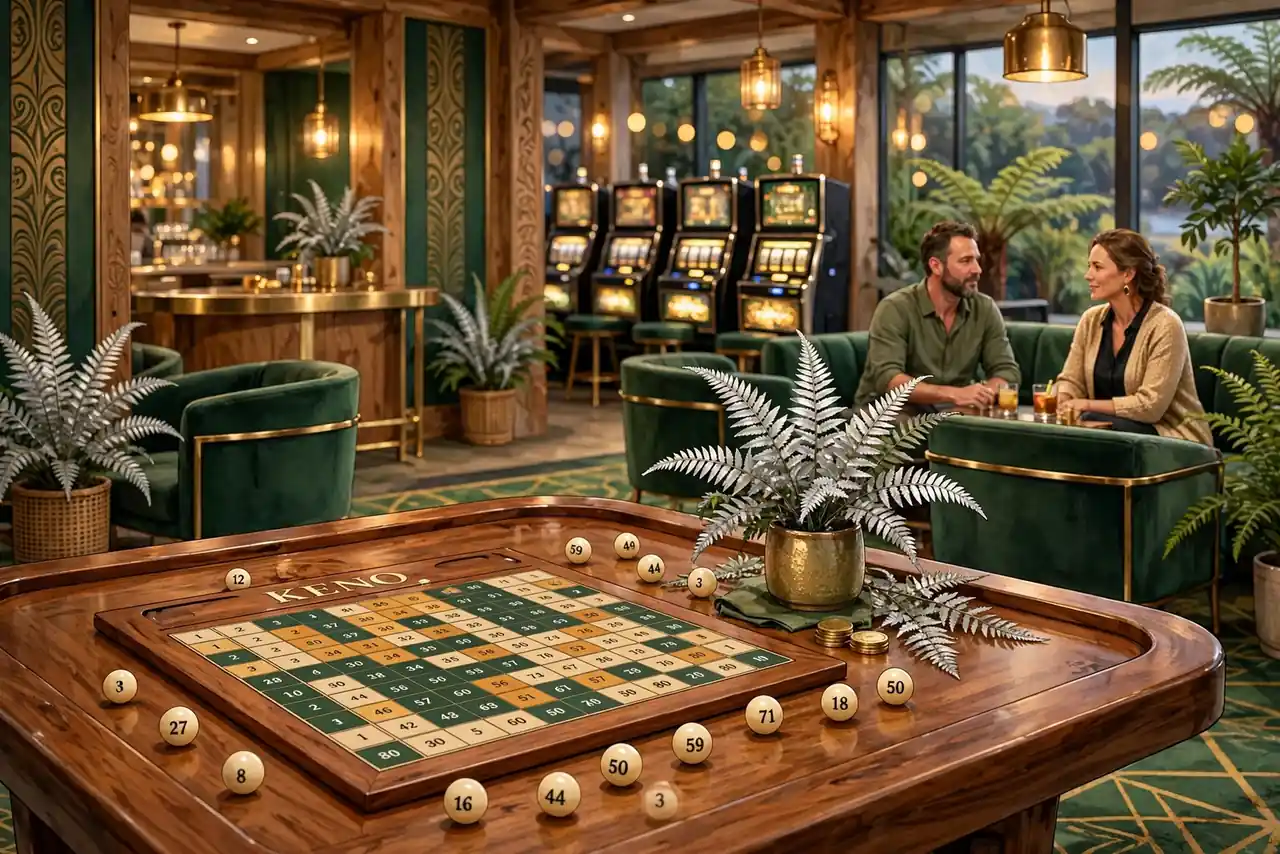
That distinction matters because the label can combine two different ideas: the kind of game being played and the wider service through which it is accessed. Bingo refers to the game product. “Casino” describes the broader online gambling context. Using the combined phrase does not establish that a particular bingo game follows a special set of rules, nor does it explain how a round operates.
The same distinction applies to “bingo casinos,” a plural description of services associated with online bingo. It is not a formal category that, on its own, identifies a provider’s ownership, operating arrangements or legal status. Those matters cannot be inferred from a name or marketing description alone.
At the product level, bingo sits alongside other online gambling verticals under the same licensing umbrella as other casino products. This is a classification point, not a claim that every service using the label holds a New Zealand licence. The label should therefore be read as a description of the products presented, not as evidence of regulatory approval.
In practice, a service may use “bingo casino” as a broad category name even though the bingo games within it differ in their rules and presentation. The category label alone does not specify whether play is based on a particular card layout, pattern, ticket structure or prize arrangement. Those details belong to the individual game description, not to the umbrella term.
Nor does the phrase necessarily mean that bingo and other casino products share the same interface, account conditions or game mechanics. It indicates a broad online gambling setting, while the individual products remain distinct. A bingo round is not transformed into a casino table game simply because both appear under one service or category heading.
For New Zealand readers, the wording also needs to be kept separate from questions about local regulation. The phrase “bingo casino” does not show whether an operator is authorised to serve customers in a particular jurisdiction. Regulatory status depends on the applicable rules and the provider’s position under them, rather than the wording used to describe its catalogue.

Explore roulette variants alongside baccarat, craps, keno and bingo, with topics covering rules, strategies, free…
Learn how roulette’s game cycle, RNG and live-dealer formats differ, and what automatic betting tools…
The most precise interpretation is therefore modest: a bingo casino is an online gambling service or category in which bingo is presented within a wider casino-product framework. It names a commercial context, not a single game format, a guarantee about how products are organised, or proof of licensing.
Playing a Bingo Round: Cards, Lines and Marking
Five-line bingo is played on a five-by-five card containing 25 numbered squares. Unlike cards with a free centre, every square on this card carries a number. The layout matters because a line is made from marked squares on a single ticket; a player’s progress is judged against that ticket rather than by adding together marks from separate cards.
As numbers are drawn, matching squares become relevant to the round’s line stages. Where automatic marking is available, the system records matches and checks whether the ticket meets an eligible result. This removes the need to follow every match manually, but it does not change which squares belong to a particular ticket or how a line is counted. If marking is manual, the same basic distinction applies: each card has its own pattern of completed squares.
The prize progression gives the variant its name. The round moves from one completed line to two, then three and four, before reaching five lines. Five completed lines are also called a full house. Each stage is a distinct point in the progression, so a ticket that has reached an earlier stage may still have further lines to complete. The precise eligibility of a ticket at a prize stage depends on the room’s rules.
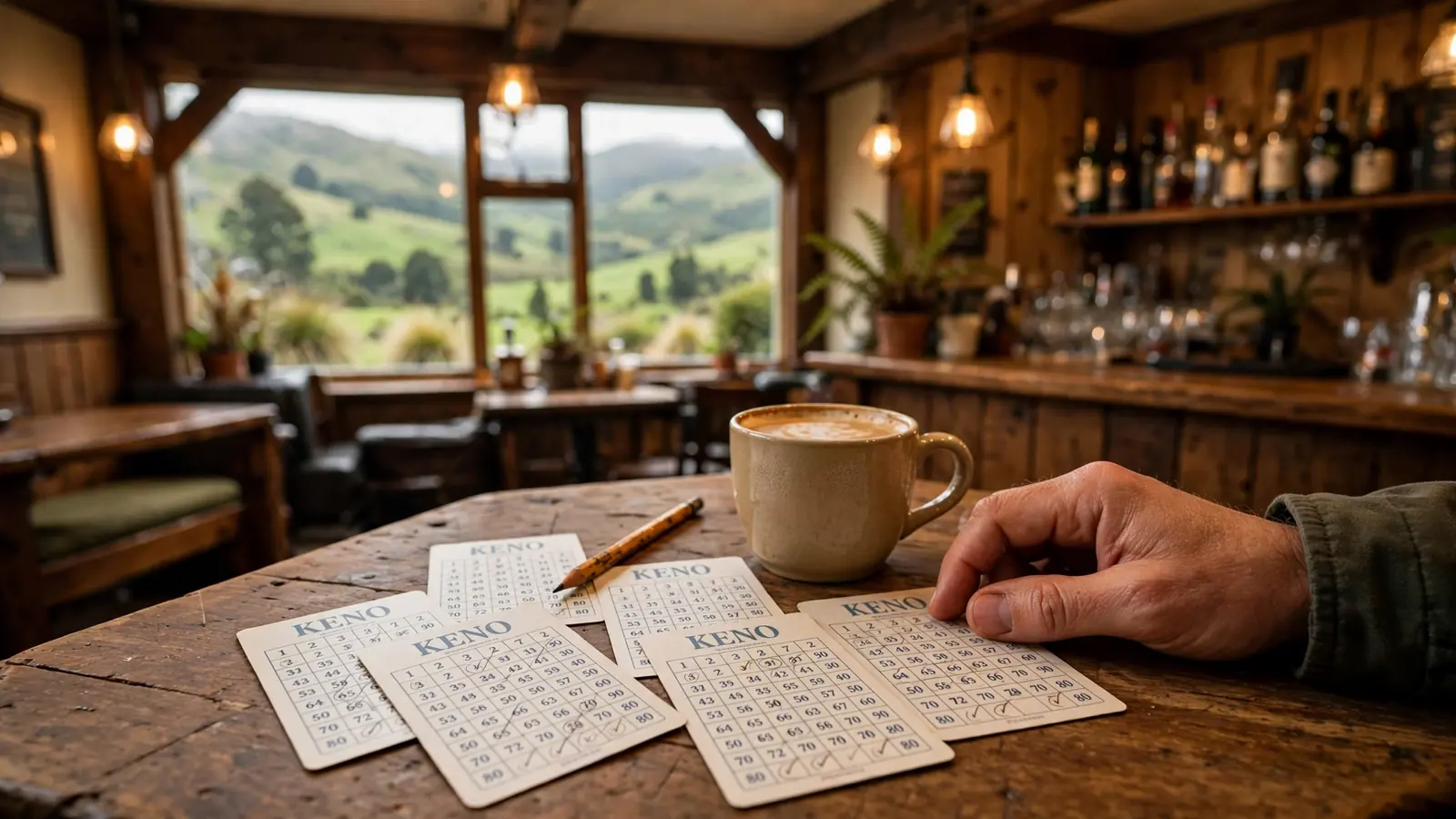
A key constraint is that the required lines must be formed on the same ticket. For instance, a line completed on one card and another line completed on a second card do not combine to create a two-line result. This remains important when several tickets are in play: more cards may create more separate chances of meeting a result, but their marked squares cannot be pooled to satisfy a line requirement.
The way a room defines a line also affects how a card is assessed. In a room that counts horizontal rows, each completed row is a line. A row with three marked numbers is not itself a completed row; nor does it add partial credit to another row. If two rows are complete, they count as two lines even when a different row has three marked numbers. The relevant pattern is therefore not simply the total number of marks on the card, but whether those marks complete the required lines under that room’s rules.
For someone learning how to play bingo in a casino setting, the practical sequence is to identify the ticket being assessed, follow its matching numbers, and check which line stage it has reached. Automatic marking can help track that process, but the ticket-level rule remains central. Before a round, the displayed rules clarify which patterns count and how results are recognised. The format is straightforward in structure, while accurate interpretation depends on keeping each ticket’s progress separate.
New Zealand’s Online Casino Licensing Transition
The Department of Internal Affairs (DIA) is New Zealand’s principal gambling regulator. Its role in online casino regulation is changing under the Online Casino Gambling Act 2026, which establishes the country’s first domestic licensing framework for this activity. The legislation took effect on 1 May 2026, but the system is being introduced in stages rather than becoming fully operational immediately.
Licensing Transition
The Online Casino Gambling Act 2026 took effect on 1 May 2026, introducing a domestic licensing framework.
Existing providers serving New Zealand may continue operating under transition provisions until 1 December 2026.
By 1 December 2026, providers must have applied for a licence or stop conducting online casino gambling in New Zealand.
The fully operational licensing regime is expected to be in place by 2027.
The transition provisions allow providers that were already serving people in New Zealand before the Act commenced to continue temporarily. That permission runs only until 1 December 2026. Providers that have not applied for a licence must stop conducting online casino gambling in New Zealand by that date; an unsuccessful application also requires the provider to leave the market. The fully operational licensing regime is expected in 2027, according to the DIA’s published account of the staged introduction.
The framework marks a change from the position under the Gambling Act 2003. Domestic online casinos were not permitted, while offshore services had not been licensed or supervised by a New Zealand regulator. The new law creates a route to domestic licensing, but the transition does not mean that every provider currently accessible to New Zealand residents is licensed locally. Nor does it make the new system fully operational before its stated implementation timetable.
A specialist review of the legislation describes the proposed licensing framework as allowing a maximum of 15 online casino licences. That figure is a summary of the bill’s provision, not evidence that licences have already been issued or that all applications will succeed. The distinction matters during a staged transition: the existence of a licensing framework and the operational status of individual providers are separate questions.
The regime also restricts promotion during the transition period. Accordingly, the change is best understood as a market-wide regulatory shift, not as an endorsement of particular casino or bingo services. For online bingo offered within a casino framework, the relevant licensing context is the same broader one that applies to online casino gambling.
Payments and Banking for Bingo Casino Sites
Payment arrangements for online bingo have changed since POLi, a bank-direct payment service used for casino deposits, was discontinued in 2024. A specialist review describes POLi as a major route for New Zealand casino funding for more than a decade. Its removal shifted attention to other bank-linked services, card payments and e-wallets.
The options identified for New Zealand players include Worldline and Blink, alongside direct bank transfers from ASB, ANZ, BNZ and Westpac. Visa and Mastercard debit cards are also used, as are e-wallets such as Skrill, Neteller and MuchBetter. These methods differ in how they connect a deposit to a bank account or stored balance, but their availability depends on the payment options presented by the particular operator.
For a bingo service operating within a wider casino platform, the cashier generally provides the relevant funding routes. The presence of a named payment method in the market does not establish that it is supported by every platform. Bank transfers, debit cards and e-wallets should therefore be understood as categories of available alternatives, rather than a universal set offered across all bingo services.
POLi’s discontinuation is a notable change in the payment landscape, but it does not mean that bank-linked funding has disappeared. Direct transfers from the named New Zealand banks remain among the reported alternatives, while Worldline and Blink provide other payment routes. Debit cards and e-wallets add further options for account funding.
The practical distinction is between the method a player already uses and the methods an operator makes available. A payment name alone does not establish the terms attached to a transaction or whether it can be used for every account. Payment arrangements should be considered separately from bingo rules and promotional conditions: they concern how funds reach an account, not how a bingo round is played or how a bonus is assessed.
Payment Alternatives
Following the 2024 discontinuation of POLi, New Zealand players can use Worldline, Blink, direct bank transfers (ASB, ANZ, BNZ, Westpac), debit cards, and e-wallets like Skrill, Neteller, and MuchBetter.
How Bingo Fits Alongside Other Casino Games
Bingo and casino games are distinct product categories, but they do not sit in separate licensing systems. For an online provider offering both, bingo is covered within the same regulatory framework as its other casino offerings. The relevant distinction is therefore between the kinds of games made available, not between separate licensing umbrellas for each category.
This shared framework gives a useful way to understand sites that combine bingo with other casino products. A menu may separate the games into different sections, and the rules of play may differ by product, but those differences do not establish a separate licensing status for bingo. Its place within a broader casino offering does not make it a different regulatory class.
The distinction matters when describing a provider’s services. A site may present bingo as one part of a wider collection rather than as a standalone destination. That describes how the products are grouped; it does not, by itself, indicate that bingo is governed under a separate licence. Likewise, the fact that a provider offers casino games alongside bingo does not make the games interchangeable: the categories remain different even when they fall within one regulatory framework.
For New Zealand, the key point is the scope of that framework. Bingo belongs within the same licensing umbrella as other online casino verticals. Any description of a combined offering should therefore avoid implying that bingo requires an entirely separate licensing structure from the rest of the casino products. At the same time, the shared umbrella alone does not establish details about a particular provider’s licence or the availability of every product. Those are separate matters and cannot be inferred merely from the presence of bingo and casino games on one site.
This approach keeps product classification separate from licensing. Bingo can be grouped with other casino games in a provider’s offering while remaining its own game category; the regulatory framework applies across those categories rather than creating a distinct licensing track for bingo.

Bingo in New Zealand: Round Lengths and Ticket Costs
Round duration and ticket price give a practical sense of how quickly spending can accumulate in online bingo. The figures available are estimates reported in a specialist review, not fixed prices or timings across all offshore-licensed rooms. Individual rooms may set different schedules and costs.
For standard 90-ball games, that review reports rounds lasting three to seven minutes, with tickets priced from NZ$0.10 to NZ$0.50. A session can therefore involve several rounds in a relatively short period, though the total cost depends on the number of tickets bought and the room’s price for each one. The duration describes the game, not the time required to register or wait for a particular game to begin.
Speed bingo is a shorter format. The same type of review describes 30-ball games as lasting 60 to 90 seconds, with a 3-by-3 card and a single full-house prize. It places ticket prices in a range of NZ$0.25 to NZ$1.00. The shorter round does not necessarily mean lower spending: a higher ticket price or repeated purchases can offset the time saved.

A hypothetical calculation makes the relationship between ticket count and session cost clear. At NZ$0.40 per ticket, three tickets cost NZ$1.20 for one round. Keeping that selection for ten rounds brings the total to NZ$12. This is an arithmetic illustration, not a claim about a standard room price or a typical session.
These amounts are the cost of tickets, not a measure of likely returns. Prize outcomes depend on the game and eligible tickets, and a purchase does not ensure a prize. For comparing time and spending, the useful distinction is between the longer reported window for 90-ball games and the shorter speed format, alongside the per-ticket price shown for each. Actual room schedules and prices should be treated as specific to the room and game rather than as market-wide terms.
Are online casinos licensed in New Zealand in 2026?
New Zealand’s online casino licensing regime is being introduced in stages and is expected to be fully operational in 2027. Offshore licences are issued outside New Zealand and are not New Zealand licences.
Is online bingo legal for players in New Zealand?
Yes. The Gambling Act 2003 does not prohibit New Zealand residents from playing at offshore-licensed bingo rooms; adults aged 18 or over may use them.
What RTP should I expect from online bingo games?
Published RTPs for online bingo games from rooms supplied by Pragmatic Play, Playtech and Microgaming generally range from 85% to 92%. RTP is a theoretical long-term measure, not a guarantee for an individual session.
Can I play online bingo for real money in NZ?
Yes. New Zealand players can access offshore-licensed bingo rooms, where tickets may cost NZ$0.10–NZ$0.50 in standard 90-ball games and NZ$0.25–NZ$1.00 in speed bingo.
How do I deposit at an NZ bingo site after POLi closed?
POLi was discontinued in 2024. Alternatives include Worldline, Blink, direct bank transfers from ASB, ANZ, BNZ or Westpac, Visa or Mastercard debit, and e-wallets such as Skrill, Neteller and MuchBetter.
Created by the ”Casino Adviser NZ” editorial team.