Bitcoin Roulette in New Zealand: Payments and Play
 Available in US
A practical assessment separates roulette features, entry costs, crypto handling and play terms rather than naming a single winner.

Table of Contents
- Assessing Bitcoin Roulette Without a “Best” Ranking
- New Zealand’s Online Casino Rules and the December 2026 Transition
- Bitcoin Deposits and Withdrawals at Live Roulette Tables
- The Bitcoin Roulette Deposit-to-Play Process
- Low-Stakes Roulette and What Bitcoin Casino Sites Disclose
- Bitcoin Roulette Variants, Lightning Roulette and Volatility
- Bitcoin Roulette Alongside Blackjack and Other Casino Games
- Bitcoin Cash, Casino Payments and Changing Coin Values
- Roulette Apps and APKs: Verification Before Installation
- Bitcoin Roulette Dice and the Limits of Trust Claims
Assessing Bitcoin Roulette Without a “Best” Ranking
A “best” label can combine several different judgments: the roulette experience, the cost of entering, the way a site handles cryptocurrency, and the terms attached to play. Those are not interchangeable. A low deposit threshold does not establish that a roulette game is preferable, and a game title does not establish how a Bitcoin balance is treated. Assessing these points separately gives a clearer picture than treating “best Bitcoin roulette” as a single measurable category.
One concrete comparison point is the minimum deposit. A specialist casino review reported minimum deposits at Bitcoin casinos equivalent to NZ$10–$30. That range describes a reported account-funding threshold, not a recommended amount, a minimum roulette wager, or a guarantee that every casino accepts deposits at those levels. Deposit requirements can also be expressed in cryptocurrency, so the NZ-dollar equivalent may depend on the value used when the comparison was made. It is therefore a limited indicator of entry cost, rather than a measure of game quality.
Roulette itself calls for different evidence. Useful details would include the rules of the particular game, its stated table limits, and the terms that apply to wagers. A provider’s use of a roulette label alone does not resolve those questions. Nor does a Bitcoin payment option establish that every game on the site can be played with that balance. These distinctions matter when evaluating a claim about an online Bitcoin roulette game: payment method, game rules and account conditions describe separate parts of the offer.
Choosing a bitcoin roulette site in New Zealand calls for checking the details that are actually available about each operator. This list offers a concise reference to the stated licensing and payout information.
Payout speed: 1-3 business days Wintino lists a payout speed of 1–3 business days.
License: Curaçao Gaming Authority, licence no. OGL/2024/165/0185 BitStarz lists a Curaçao Gaming Authority licence, number OGL/2024/165/0185.
License: Tobique Gaming Commission, licence no. 0000002 Ricky Casino lists a Tobique Gaming Commission licence, number 0000002.
License: Tobique Gaming Commission, licence no. 0000064 Neospin lists a Tobique Gaming Commission licence, number 0000064.
License: Tobique Gaming Commission, licence no. 0000091 7Bit Casino lists a Tobique Gaming Commission licence, number 0000091.
License: Malta Gaming Authority, licence no. MGA/B2C/394/2017 N1 Casino lists a Malta Gaming Authority licence, number MGA/B2C/394/2017.
License: 07017519840 · Payout speed: 1-3 business days Zotabet lists licence number 07017519840 and a payout speed of 1–3 business days.
License: Malta Gaming Authority, licence no. MGA/B2C/370/2017 Play Grand lists a Malta Gaming Authority licence, number MGA/B2C/370/2017.
Payout speed: 1-3 business days Lamabet lists a payout speed of 1–3 business days.
The value of a crypto balance is another distinct consideration. A specialist review noted that a balance held in a volatile coin can rise or fall in value. Consequently, the NZ-dollar value associated with a deposit may not remain constant between funding an account and later using or withdrawing the balance. This is a currency-value risk, not a measure of roulette odds or game performance. A comparison that considers only the amount deposited in Bitcoin can therefore obscure changes in its value when expressed in New Zealand dollars.
Searches for free Bitcoin roulette, a faucet, or no-deposit play point to a different question from which roulette game is best. Such wording concerns whether play is offered without an ordinary deposit or through some promotional mechanism. It does not, by itself, describe the game’s rules, the value of any credit, or the conditions attached to using or withdrawing it. The label “free” should not be treated as a complete description of an offer; its terms determine what the credit can actually be used for.
The same separation applies to “BTC roulette” and “roulette with Bitcoin.” These expressions can describe a payment preference rather than a particular version of roulette. A comparison is more meaningful when it identifies what is being evaluated: the game rules, the minimum deposit, the treatment of the crypto balance, or the conditions attached to promotional credit. A single ranking can conceal these differences by turning unrelated features into one score.

For a restrained assessment, the relevant evidence should be attributed to the point it supports. A reported deposit range can inform an account-entry comparison, but it does not show that a roulette table has low stakes. A statement about coin volatility can inform the value of a balance, but it does not establish that a game is fairer or more entertaining. Likewise, a no-deposit label does not establish that the resulting credit has unrestricted value. Each claim needs to be read within its own scope.
In New Zealand, the phrase “best Bitcoin roulette” is therefore not a conclusion that follows from a payment method or a deposit threshold. It can only be a shorthand for a stated set of priorities. Without specifying those priorities, a ranking risks comparing unlike things: a game against a payment feature, or a promotional label against a cash deposit. A careful assessment keeps those categories separate and treats the NZ-dollar cost of a crypto balance as changeable rather than fixed.
New Zealand’s Online Casino Rules and the December 2026 Transition
New Zealand’s framework distinguishes between the conduct of gambling operators and the choices available to individual players. The legislation creates a domestic system for licensing online casino businesses; it does not make visiting an offshore casino a criminal offence for a person in New Zealand. That distinction matters when considering Bitcoin roulette: the use of cryptocurrency does not itself change the legal position of the player, but it does not give an offshore casino a New Zealand licence either.
Legal Exposure
New offshore operators are barred from entering the New Zealand market from 1 May 2026, and unlicensed operation is expected to become an offence around the middle of 2027.
The timeline requires care because accounts of the legislation do not use the same effective date. The statutory framework is described as having come into force on 1 May 2026, with a transition for eligible operators already serving the New Zealand market. A specialist review, by contrast, reports that the bill passed its third reading on 23 April 2026 and presents 1 December 2026 as the date the new licensing requirement takes effect. These statements should not be collapsed into a single date: commencement of the Act and the end of the transition are distinct stages in the change.
Under the transitional arrangement, online casinos that were already providing services to people in New Zealand before 1 May 2026 may continue until 1 December 2026, subject to the Act’s provisions. New offshore operators are barred from entering the market from 1 May 2026. The transition is therefore not an open invitation for any international casino to begin targeting Kiwis, nor does it mean that every offshore platform is covered by the arrangement. The full domestic licensing regime is expected to become operational in 2027, while unlicensed operation is expected to become an offence around the middle of that year.
A specialist review describes the planned framework as allowing no more than 15 licences and says that, from 1 December 2026, operators seeking to offer online casino gambling legally to people in New Zealand will need a licence under the Online Casino Gambling Act 2026. This is an account of the regulatory transition, not evidence that offshore Bitcoin casinos already hold domestic approval. Offshore crypto casinos are not currently licensed by the Department of Internal Affairs (DIA), and international platforms should not be treated as New Zealand-regulated merely because they accept customers in the country.

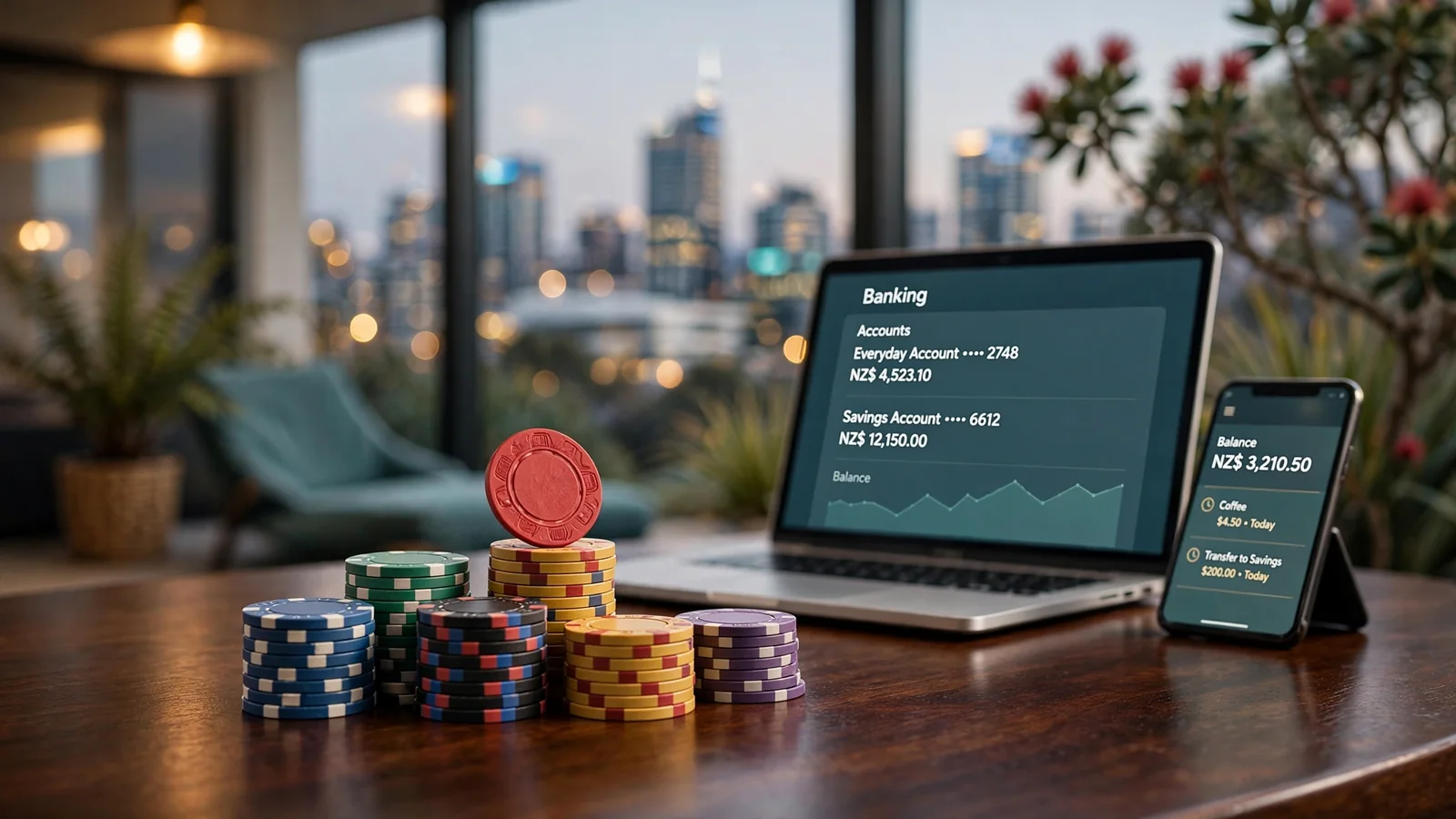
The legal exposure described for operators should not be transferred to players. New Zealand law does not prohibit individual Kiwis from accessing and playing at offshore sites, including sites that accept cryptocurrency. There is no general ban on international crypto casinos, but that does not amount to local authorisation or oversight. The licensing rules concern the businesses offering the gambling service; they do not turn a customer’s act of playing into an offence simply because the operator is offshore or lacks a New Zealand licence.
That distinction has practical limits. Before the new framework, online casino gambling supplied from outside New Zealand was not licensed or supervised by a New Zealand regulator. A customer using an offshore website therefore had no domestic government recourse comparable to the protections associated with a locally supervised service. The transition does not erase that distinction: an offshore site’s own statements about licensing should not be read as proof of DIA regulation, and the presence of Bitcoin roulette does not alter the jurisdiction in which the operator is licensed.
For anyone assessing online roulette paid for with Bitcoin, the relevant legal question is consequently not only whether the player may participate, but also whether the operator is subject to New Zealand’s domestic regime at the relevant time. During the transition, eligibility to continue operating depends on the operator’s prior activity and the Act’s transitional provisions. After the transition, the licensing framework is intended to govern operators serving the New Zealand market. The player’s position remains separate from the operator’s compliance obligations.
Regulatory Transition
- The Online Casino Gambling Act 2026 creates a domestic licensing framework administered by the DIA.
- A transition period exists for eligible operators already serving the market until 1 December 2026.
- Use of cryptocurrency does not grant an offshore casino a New Zealand licence.
- Accessing offshore sites is not a criminal offence for individual players in New Zealand.
Bitcoin Deposits and Withdrawals at Live Roulette Tables
When considering live roulette with Bitcoin, the payment timeline has two separate parts: the time for a deposit to register and the time needed to approve and send a withdrawal. A live table does not change how those stages work. It may, however, make the distinction more noticeable: a balance that has not yet been credited cannot be used to join a game, while a withdrawal request is not complete simply because it has been submitted.
A specialist casino review reports that Bitcoin deposits may appear after one to three blockchain confirmations, with the stated interval being roughly 10–30 minutes. This is a reported estimate, not a guaranteed arrival window; confirmation time can vary, and a casino may apply its own crediting procedure after a transaction is confirmed. The same review gives a figure of under two minutes for USDT sent on the TRC-20 network. That comparison concerns a different cryptocurrency and network, not a faster Bitcoin transaction.
For someone planning to play live roulette, the practical point is that a deposit may not be immediately available at the table. A payment shown as sent in a wallet can still be awaiting blockchain confirmation, and the casino balance may update only after the required confirmation stage. The time displayed by the wallet and the time at which funds become playable are therefore not necessarily the same. A table’s pace cannot remove that payment-processing interval.
Withdrawal timing involves a further step. The casino must approve the request before sending funds to the wallet; blockchain processing happens after that approval. A specialist casino review reports that withdrawals at leading crypto casinos can be processed within 5–30 minutes once approved. This estimate applies to the casino’s processing after approval, not necessarily to the full period from submitting a request to receiving funds. Review checks or other operator procedures may take additional time, and the transaction must still be recorded by the relevant network.

This distinction matters when assessing claims about fast Bitcoin roulette or quick cash-outs. A short blockchain interval does not establish how quickly a casino will review a withdrawal, and a rapid approval does not determine how soon a wallet will show the transfer. Deposits and withdrawals are not mirror processes: deposits are credited following confirmation of an incoming transaction, whereas withdrawals wait first on casino approval and then on network processing.
Transaction fees also vary with network activity and the cryptocurrency used. The amount ultimately received can therefore differ from the requested amount after fees, while the time taken can differ from an estimate. Cryptocurrency values can also change between a deposit and a later withdrawal, so the coin balance and its value in New Zealand dollars are not interchangeable measures.
For a live table, the relevant comparison is not simply which payment method appears fastest in a summary. It is whether the published timing separates confirmation, casino handling and final receipt. Figures reported by a review should be treated as estimates tied to its reporting, rather than as a promise about every transaction or every operator. A deposit delay may affect when play can begin; a withdrawal delay concerns access to funds after a session and should be assessed separately.
May appear after one to three blockchain confirmations, typically taking roughly 10–30 minutes.
Reported to be faster, with some reviews indicating processing times of under two minutes.
Can be processed within 5–30 minutes once the casino has approved the request.
The Bitcoin Roulette Deposit-to-Play Process
A Bitcoin roulette session begins with a payment transfer, not with a bet. The casino’s cashier should identify the cryptocurrency and network it accepts and provide the corresponding deposit instructions. A specialist review describes the basic sequence as selecting a supported cryptocurrency, copying the casino’s deposit address and sending funds to it. That sequence is only useful when the address and network match the instructions exactly: an address for one network cannot safely be assumed to work with another.
Before transferring funds, the account holder can check the deposit details on the casino’s own payment screen and compare them with the sending wallet. A dedicated crypto wallet keeps gambling transactions separate from other funds, while two-factor authentication adds a security step to account access. Bitcoin deposits should be sent from a personal wallet rather than directly from a crypto exchange. These precautions do not guarantee that a transfer can be recovered if details are wrong, so confirmation of the address and network matters before authorising payment.
After the transfer is submitted, the casino credits the deposit following blockchain confirmation. The balance may then be available for roulette, including a European roulette game if the casino offers one; the payment process itself does not establish which roulette formats are available. Transaction fees vary according to network activity and the cryptocurrency used. The amount credited can therefore differ from the amount sent, and the value of a crypto-denominated balance can change between deposit and withdrawal. Setting a deposit limit provides a practical boundary for spending, but it does not remove those payment or exchange-value risks.


A withdrawal reverses the direction of the transfer but adds a casino review stage. In the procedure described by a specialist review, the account holder selects a cryptocurrency, enters a destination wallet address and withdrawal amount, and submits the request. The casino must approve it before sending the funds. Once sent, the withdrawal is credited after blockchain confirmation. Casino approval and blockchain confirmation are separate events; the latter cannot begin until the former has resulted in a transaction being broadcast.
A crypto payment does not necessarily remove identity checks. A specialist review notes that a casino may request verification for a first withdrawal, a larger cashout or a security check. Reputable casinos still require identity verification even when deposits are made with cryptocurrency. Where documents are requested, the account name and payment details should be consistent with the casino’s stated requirements; verification status can affect whether a withdrawal is approved.
For someone intending to play roulette with Bitcoin, the useful distinction is between funds shown in the casino account and funds controlled in a personal wallet. A casino balance is not yet a completed withdrawal, and a submitted withdrawal is not yet a confirmed blockchain payment. Keeping transaction records, using a dedicated wallet, enabling two-factor authentication and checking the network and destination address help make each step traceable. They do not change the casino’s approval process or prevent cryptocurrency values and fees from varying.
Deposit-to-Play Process
Select the supported cryptocurrency, copy the casino’s deposit address, and send funds from a personal wallet.
Wait for the transaction to be confirmed on the blockchain so the casino can credit the account.
Once the balance is credited, use the funds to join a roulette game, such as European roulette.
Select the destination wallet address and amount, then submit the request for casino approval.
Low-Stakes Roulette and What Bitcoin Casino Sites Disclose
A small deposit does not establish that a roulette table is suitable for low-stakes play. Deposit thresholds and table betting limits are separate conditions: the first concerns the amount required to fund an account, while the second determines the smallest wager accepted at a particular table. A casino may permit a modest deposit without offering a table with a correspondingly modest minimum bet.
One specialist casino review reported minimum deposits at bitcoin casinos in the NZ$10–$30 range. That is a time-sensitive report, not a confirmed market-wide standard or a guarantee that a particular site will accept the same amount. Deposit terms may differ between operators and can change. The figure also says nothing about the minimum roulette wager, the available table limits or how long a small balance might last.
For low-stakes bitcoin roulette, the useful evidence would therefore include both the deposit threshold and the minimum bet for the specific table. Those details need to be read as separate disclosures. A general payment page may state the minimum amount needed to deposit, while table information may set a different floor for each game. Without both, the deposit amount alone cannot show whether a low-stakes session is possible.
Searches for bitcoin roulette sites or roulette sites that accept bitcoin can also blur another distinction: payment acceptance does not demonstrate that a site offers a particular roulette table or betting limit. A payment method, a game listing and a table’s rules are different pieces of information. Each would need to be confirmed in the relevant account or game terms; one should not be inferred from another.


The phrase “bitcoin roulette strategies” likewise does not resolve the question of stake size. A strategy description cannot establish a table’s minimum bet or alter the operator’s stated limit. For assessing affordability, the relevant disclosed terms are the accepted deposit amount and the table’s minimum wager, not the label attached to a betting approach.
A specialist review has also reported that the casinos it listed were not licensed by New Zealand’s Department of Internal Affairs. That statement describes the review’s listed operators at the time it was written; it should not be read as a current licensing check or as evidence that an offshore site has domestic oversight or consumer protections. A low minimum deposit is not evidence of regulatory status, nor does it establish that a site is suitable for low-stakes play.
The available distinction is narrow but important: minimum deposits describe account funding, whereas minimum bets govern play at a table. Where a casino discloses only the former, its suitability for low-stakes roulette remains unestablished.
Bitcoin Roulette Variants, Lightning Roulette and Volatility
“Bitcoin roulette” can describe roulette played with a cryptocurrency balance; it does not, by itself, identify a distinct roulette rule set. Labels such as European or American roulette concern game formats, while Bitcoin describes a payment or account-balance method. A bitcoin roulette game may therefore be an ordinary roulette product presented alongside a crypto payment option. The label alone does not establish the table’s rules, limits or payment arrangements.
A “Bitcoin roulette” label typically describes the payment method rather than a specific set of game rules or a distinct roulette format.
“Lightning Roulette” requires a similar distinction. The phrase may be used as a game title, but it is not evidence that a casino accepts Bitcoin payments over the Lightning Network. A game name and a payment network are separate things. Without an operator’s clear description of both, the title cannot establish which roulette product is being offered or which Bitcoin transfer method is supported. The same caution applies when a site groups roulette games under a general cryptocurrency heading: that wording does not confirm that every listed game can be funded in the same way.
The term “variant” can also refer to differences in roulette rules rather than payment technology. These are separate questions: game rules determine how a roulette product works, whereas the payment method concerns how funds are held or transferred. A description that answers one does not necessarily answer the other. In particular, the word “Lightning” should not be treated as a technical payment specification unless the casino explicitly identifies it as such.
A specialist review has described a further consideration for crypto-funded play: when a deposited coin is volatile, the value represented by the balance can rise or fall. This means that a balance displayed in cryptocurrency and its value in another currency may not remain equivalent between deposit and withdrawal. The change is separate from the result of a roulette wager; a balance can change in external value even when no new game outcome has been recorded. Cryptocurrency values can fluctuate during that interval, and transaction fees also vary with the network activity and cryptocurrency used.


For Kiwis, using cryptocurrency at an offshore online casino is not currently prohibited for individuals. That does not make such a casino domestically regulated: offshore crypto casinos do not have New Zealand regulatory oversight or the associated local consumer protections. The distinction matters when evaluating claims about a roulette title, a payment feature or the value shown in an account. A game label cannot establish regulatory status, and a cryptocurrency balance should not be assumed to preserve a fixed value.
Bitcoin Roulette Alongside Blackjack and Other Casino Games
Roulette, blackjack and other casino games belong to the same broad online-casino setting, but the game name does not establish how a site is regulated or what payment methods it accepts. A roulette table labelled for Bitcoin, for instance, combines a game category with a payment-related description. That label alone does not show that the operator has New Zealand approval, or that Bitcoin is available for blackjack and its other games as well.
The domestic position is narrower than the range of games that may appear on offshore websites. New Zealand has no locally licensed online casinos, and local casinos are not permitted to offer games funded with cryptocurrency. The Online Casino Gambling Act 2026 creates a domestic licensing framework for online casino gambling, but that does not make crypto games an authorised offering of New Zealand-based casinos. Nor does it mean that an offshore site becomes locally regulated simply because it offers games to people in New Zealand.
This distinction matters when roulette is considered alongside blackjack. A casino may present both games on the same platform, but their shared location in a game catalogue does not establish that either is supervised by a New Zealand regulator. Offshore crypto casinos do not have domestic New Zealand regulatory oversight or the associated local consumer protections. The presence of roulette, blackjack or other familiar casino games should therefore not be treated as evidence of domestic licensing.
Attention: The presence of familiar games like roulette and blackjack on an offshore platform does not mean the operator is supervised by a New Zealand regulator.
The new framework is administered by the Department of Internal Affairs. A specialist review has described the regime as capped at 15 licences; that figure is a reported feature of the framework, not evidence that a particular crypto casino holds one. There are currently no New Zealand-licensed online casinos, so a claim that an offshore platform is “licensed” needs to be distinguished from a claim of New Zealand licensing. A licence from elsewhere does not itself amount to domestic oversight.
For searches about Bitcoin roulette in New Zealand, the useful distinction is consequently between the game being offered and the legal status of the provider. The same applies to a live roulette table advertised alongside blackjack: the format or game list does not settle whether cryptocurrency is accepted, and the payment method does not establish local regulatory protection. These are separate questions, and neither can be answered reliably from a game label alone.
The framework’s relevance to casino games is not that roulette and blackjack receive different domestic status based on their names. Rather, the restriction concerns the local provision of online casino gambling and the use of cryptocurrency by local casinos. Where a platform operates offshore, the fact that its catalogue includes familiar casino games does not bring it under New Zealand’s domestic regulatory oversight.
Bitcoin Cash, Casino Payments and Changing Coin Values
Bitcoin Cash and Bitcoin are separate cryptocurrencies, so a reference to one does not establish that a casino accepts the other. For roulette, the distinction is about the payment asset rather than the game: a Bitcoin Cash deposit would depend on the casino explicitly supporting that coin. The label alone does not establish whether it can be used for a particular table, including live roulette.

A specialist casino review has noted that the value of a crypto-denominated balance may rise or fall after a deposit. That matters when comparing the amount held in a casino account with its value at a later point, including when converting it back into another currency. The number of coins and their market value are different measures; an unchanged coin balance does not guarantee an unchanged monetary value.
This issue applies beyond Bitcoin Cash. Cryptocurrency values can fluctuate between deposit and withdrawal, and transaction fees vary with network activity and the cryptocurrency used. Those considerations are distinct: a changing coin price affects the value of a balance, while a transaction fee affects the amount involved in moving funds. Neither should be assumed to work identically across different coins.
In New Zealand, individuals are not barred from using cryptocurrency at offshore online casinos. That does not mean such casinos are supervised by a New Zealand regulator or provide domestic consumer protections. The transitional arrangement for eligible existing offshore operators ends on 1 December 2026; it should not be read as domestic licensing or as approval for every offshore site.
Accordingly, Bitcoin Cash roulette is best understood as a question about whether a particular payment method is supported, not as a separate roulette format. The coin name does not by itself establish the terms of a casino balance, its exchange value, or the cost of transferring it. Those distinctions remain relevant whether a roulette game is played live or through another format.
- Distinguish between coin balance and market value
- Verify if a casino explicitly supports Bitcoin Cash
- Account for varying transaction fees
- Assume Bitcoin and Bitcoin Cash are interchangeable
- Expect a fixed NZ-dollar value for crypto balances
- Treat coin names as evidence of game formats
Roulette Apps and APKs: Verification Before Installation
A roulette app and an Android package file are different forms of access, but neither label establishes who published the software or whether it is genuine. A casino’s name in a file title, icon or download page is not, by itself, evidence that the application is controlled by that operator. No particular roulette app or APK can be treated as verified on the basis of those labels alone.
Installation therefore raises an account-security question before it becomes a matter of convenience. The operator’s identity and the relationship between the app and its official website should be established independently. A file obtained through an unsolicited link or an unfamiliar download page should not be assumed safe. Installing software can expose account credentials and device information, so an unverified package presents a risk beyond the roulette session itself.
Identity checks also remain relevant when an account is funded with cryptocurrency. A specialist casino review reports that crypto-oriented casinos may request identity documents before a first withdrawal, after a substantial cashout, or during a security review. The same type of review notes that a casino may ask for KYC, or Know Your Customer, checks after a large withdrawal threshold is reached or an anti-fraud check is triggered. Crypto payment does not, on its own, establish that an account is exempt from these checks.
This matters when deciding whether an app’s claims about fast access or limited registration are credible. An application cannot establish the operator’s identity, the handling of personal information, or the conditions under which an account may be reviewed. Those points need to be assessed separately from the software’s appearance.
For New Zealand users, an offshore casino app also does not provide domestic regulatory oversight or consumer protections. A polished interface or an app-store-style presentation does not change that position. Installation should not be treated as proof of regulatory status, and a request for identity documents should be considered alongside the operator’s stated account and privacy terms.

Bitcoin Roulette Dice and the Limits of Trust Claims
Roulette and dice are distinct games, even when casino menus place them close together or use “dice” in promotional labels. Roulette centres on a wheel and numbered pockets; dice games depend on dice outcomes. A shared payment method such as Bitcoin does not make their rules, outcome generation or verification equivalent.
Trust claims need to be assessed against what they actually establish. A statement that a game is “provably fair” would require an explanation of how outcomes can be independently checked, rather than relying only on the label. The same applies to claims about dice: a description of a verification method should specify what information is checked and how the check relates to the result. Without those details, the wording is not enough to demonstrate that a roulette or dice outcome can be independently verified.
The presence of Bitcoin is also not, by itself, evidence that a casino’s games are fair or that its practices are trustworthy. Payment technology and game integrity are separate matters. A player may also encounter identity checks despite using cryptocurrency. A specialist casino review reports that checks may be requested before an initial withdrawal, for a substantial cashout, or as part of a security review. Such checks concern account identity and withdrawal approval; they do not verify how a game outcome was generated.
For Kiwis using offshore crypto casinos, trust claims also sit outside domestic regulatory oversight and consumer protections. That makes precise, testable explanations more informative than broad assurances, while still not proving that a platform is safe. Cryptocurrency values can fluctuate between deposit and withdrawal, and transaction fees vary with network activity and the cryptocurrency used. Those payment risks are separate from the uncertainty of roulette or dice outcomes.
Accordingly, “Bitcoin roulette” identifies a combination of a game and a payment method, not a guarantee about fairness. “Dice” should be treated as a separate game category unless the casino clearly explains otherwise. Trust depends on the substance of a claim and the ability to check it, not on labels alone.
Is it legal to play at offshore Bitcoin casinos in New Zealand?
Yes, New Zealand law does not make it a criminal offence for individuals to play at offshore casinos. That does not mean those casinos are licensed by New Zealand; from 1 December 2026, operators wishing to legally offer online casino gambling to people in New Zealand will need a licence.
Are Bitcoin casino winnings taxable in New Zealand?
No, recreational gambling winnings, including crypto casino winnings, are generally not subject to income tax in New Zealand.
Can I play at a crypto casino without KYC?
Sometimes, but a casino may still request identity verification for a first withdrawal, a large cashout or a security check.
Is crypto gambling legal in New Zealand?
Individuals in New Zealand are not prohibited from using cryptocurrency at offshore online casinos. Local casinos cannot offer crypto games, and offshore operators need a New Zealand licence to legally offer online casino gambling from 1 December 2026.
Prepared by the Casino Adviser NZ editorial staff.