Live Dealer Roulette in New Zealand: Rules & Play
 Available in US
Learn how New Zealand’s online casino framework relates to live roulette, from streamed tables and roulette variants to betting systems.

Table of Contents
- New Zealand’s 2026 Rules for Online Live Roulette
- Why Free Live Roulette Is Often Unavailable
- How Online Casinos Stream Live Roulette
- The Dealer’s Role at a Live Roulette Table
- Playing Live Roulette on a Smart Device
- Roulette Results, Systems and the House Edge
- European and American Roulette at Live Tables
- Low-Stakes Live Roulette and Betting Strategy
- Live Roulette Apps: Practical Tips and Technical Limits
- Can a Betting System Make Live Roulette Winnable?
New Zealand’s 2026 Rules for Online Live Roulette
For Kiwi players, the legal position of online live roulette changed in 2026, but the new system is being introduced in stages. The Online Casino Gambling Act 2026 took effect on 1 May, creating New Zealand’s first domestic licensing framework for online casino gambling. Its rules cover live dealer tables as well as online pokies and digital table games: these are different products within the same online casino licence category.
The change does not mean that every offshore casino immediately needed a New Zealand licence on the day the Act began. The legislation provides a transition period, running from 1 May to 1 December 2026. During that interval, online casinos that were already serving people in New Zealand before the Act took effect may continue operating under the transitional provisions. Their position is therefore distinct from that of a new provider seeking to enter the market after the transition began.
By 1 December 2026, the transition is due to narrow access to operators approved under the new regime. The Act permits a maximum of 15 licences for the online casino sector, including operators offering live roulette. From that date, only approved operators will be legally permitted to accept Kiwi players under the new regulations. This is a limit on the number of licensed operators, not a separate allowance for roulette tables or a distinct licence for live dealer products.
Choosing a live dealer roulette option in New Zealand for 2026 calls for checking the details that matter to you. This list offers a concise reference point for reviewing the available operator information.
Payout speed: 1-3 business days Wintino lists a payout speed of 1–3 business days, a useful detail to consider when assessing it for live dealer roulette.
License: Curaçao Gaming Authority, licence no. OGL/2024/165/0185 BitStarz lists a Curaçao Gaming Authority licence, number OGL/2024/165/0185. This provides a specific licensing detail to consider.
License: Tobique Gaming Commission, licence no. 0000002 Ricky Casino lists a Tobique Gaming Commission licence, number 0000002. Its licensing information is the notable detail available here.
License: Tobique Gaming Commission, licence no. 0000064 Neospin lists a Tobique Gaming Commission licence, number 0000064. This is the available detail to note when considering it.
License: Tobique Gaming Commission, licence no. 0000091 7Bit Casino lists a Tobique Gaming Commission licence, number 0000091. The licence reference is its notable point in this list.
License: Malta Gaming Authority, licence no. MGA/B2C/394/2017 N1 Casino lists a Malta Gaming Authority licence, number MGA/B2C/394/2017. This gives readers a specific licensing reference to review.
License: 07017519840 · Payout speed: 1-3 business days Zotabet lists the licence reference 07017519840 and a payout speed of 1–3 business days. These are the available details to consider.
License: Malta Gaming Authority, licence no. MGA/B2C/370/2017 Play Grand lists a Malta Gaming Authority licence, number MGA/B2C/370/2017. Its licence reference is the notable information provided.
Payout speed: 1-3 business days Lamabet lists a payout speed of 1–3 business days. This is the specific detail available for readers assessing it.
The change also affects providers according to whether they apply. Operators without a licence application must stop serving New Zealand players by the transition deadline. Those with an application pending may continue operating while the Department of Internal Affairs considers it, but they must not advertise during that period. If an application is declined, the provider must cease its online casino operations in New Zealand and leave the market. These distinctions matter when assessing a live dealer casino: a site’s continued availability during the transition does not, on its own, establish that it has received a licence.
The full licensed regime is not expected to be fully operational until 2027. Until then, the market should be understood as being in transition rather than as having already reached its final form. New Zealand does not have a Kiwi-specific licence for live roulette, and a foreign licence should not be mistaken for a New Zealand authorisation. The domestic framework introduced by the Act is the first of its kind for online casino gambling in the country; before it, offshore online casino services were not licensed or supervised by a New Zealand regulator.
That earlier absence of local oversight did not make offshore access illegal for players. Kiwi players are not prohibited from accessing offshore platforms, and the legal framework distinguishes the customer from the provider’s obligations. A platform’s status under New Zealand’s changing rules is consequently not the same question as whether a player is permitted to visit it. Before the new domestic system, customers using offshore sites had no domestic government recourse if a dispute arose. That is a material difference from local regulatory oversight, even where an offshore operator is subject to a regulator elsewhere.

For live online roulette, the practical question is therefore not simply whether a table can be opened from New Zealand. It is whether the operator is permitted to serve the market at the relevant point in the transition, and what regulator oversees it. Offshore sites should be regulated by a recognised gambling body. That foreign oversight can provide a regulatory framework, but it should not be described as a New Zealand licence or as equivalent to domestic supervision.
Licence checks should reflect the timing of the search. The Department of Internal Affairs is the relevant place to confirm an operator’s New Zealand licence status. During the transition, a pending application and a granted licence are not interchangeable statuses; nor does a provider’s prior presence in the market necessarily mean it has been approved under the new regime. Checking with the Department is more reliable than relying on a casino’s own claim or on the mere fact that its website accepts registrations from New Zealand.
The Act thus changes the regulatory basis for live dealer roulette online without making offshore play inaccessible to Kiwi players. Existing providers may continue under transitional rules, applicants face restrictions while decisions are pending, and the post-transition market is reserved for approved operators within the statutory cap. A foreign licence may indicate oversight outside New Zealand, but only confirmation from the Department of Internal Affairs can establish an operator’s status under the domestic licensing system.
Attention: A casino’s continued availability during the transition period does not, on its own, establish that it has received a New Zealand licence.
Why Free Live Roulette Is Often Unavailable
A free roulette game can look like a live table without being one. The distinction is whether the game is actually being conducted as a live dealer session or is a practice version that reproduces some of its appearance. In a practice game, the player can explore roulette without wagering, but the experience does not establish that a real live table is being offered for free.
Live dealer roulette is generally harder to provide without a wager because operating a live table carries significant costs for the casino. This is why free access to a streamed live table is often unavailable, even when a site offers other free casino games. The limitation is economic rather than a feature of roulette’s rules: a live table requires continuing resources to run, whereas a practice version can reproduce the basic game without providing the same live service.
The wording “free live roulette” can therefore describe two different things. It may refer to a genuine live dealer session with no real-money stake, or to a non-live practice game presented in a similar format. Those options should not be treated as interchangeable. A practice version may be useful for learning where roulette bets are placed or for becoming familiar with the layout, but it is not evidence that the live dealer table itself can be played without payment.
A free online live dealer roulette offer should be assessed by what is actually free. If the game is a practice mode, the free element applies to the simulated game, not necessarily to a streamed session. If it is described as a live table, the relevant question is whether play takes place at that table without a real-money wager. The label alone does not resolve the distinction. Descriptions such as “fun mode” or “challenge” may indicate a particular format or promotion, but do not by themselves show that a live session is available at no cost.

This matters because a practice game can provide a limited kind of familiarity. It can show the arrangement of the betting area and let a player observe how a roulette round is represented in the interface. It cannot, simply by resembling a live table, reproduce the fact of participating in a session conducted live. A free roulette practice option should therefore be understood as a way to try a version of the game, not as proof of free access to the live dealer service.
The reverse is also important: the absence of a free mode does not mean that a site has no roulette available. It may offer live play only when a real-money wager is involved, while providing no free version of that same table. Availability can differ between the live table and any separate practice game. The fact that one is accessible without a wager does not establish that the other is.
Searches for free live dealer roulette may also bring together offers that use similar words for different products. “Live” can refer to the presence of a real-time dealer session, while “free” can refer to a practice version, a promotional arrangement, or simply a game that can be viewed without playing. These meanings should be separated before drawing conclusions about what is being offered. A displayed roulette interface is not enough to establish that the experience is both live and free.
Live dealer roulette is generally harder to provide without a wager because operating a live table carries significant economic costs for the casino.
The available general picture is qualified rather than absolute. Live dealer games are typically not offered for free because of the costs of operating a live table. That does not rule out every possible free-access arrangement, but it does explain why a free practice game is more readily distinguishable from a free live session than the marketing language may suggest. The relevant distinction is the format being played, not whether both options share roulette imagery or a similar betting layout.
For Kiwi players, the practical conclusion is narrow: free roulette may mean a practice version rather than a live dealer table. The term “live dealer roulette free play” should not be taken as a guarantee that a streamed session can be entered without a wager. Where an offer is unclear, its description needs to establish whether it refers to the actual live table or a separate non-live mode. This keeps the claim aligned with what is available, without treating a lookalike practice game as the same product.

How Online Casinos Stream Live Roulette
Live roulette combines a physical wheel with a video connection to an online game interface. The wheel is real rather than a graphic generated entirely by software, and the game is broadcast from a professional studio. A live video feed carries the table action to participants, who can follow the round as it happens and interact with the professional dealer through the online format.
This arrangement gives the game two connected parts. The physical table is where the roulette round takes place; the digital interface presents the broadcast and enables participation remotely. The video is therefore central to the experience: it shows the live table rather than simply displaying a result produced by a fully digital roulette game. The interface supports the online session, while the wheel remains physical.
From studio table to online session
A studio provides the setting for the live broadcast, with a real roulette wheel at the centre of the game. The feed brings that setting to online participants, making the table visible beyond the studio itself. Rather than being present in the room, a participant watches the round through the stream and uses the online interface to take part.
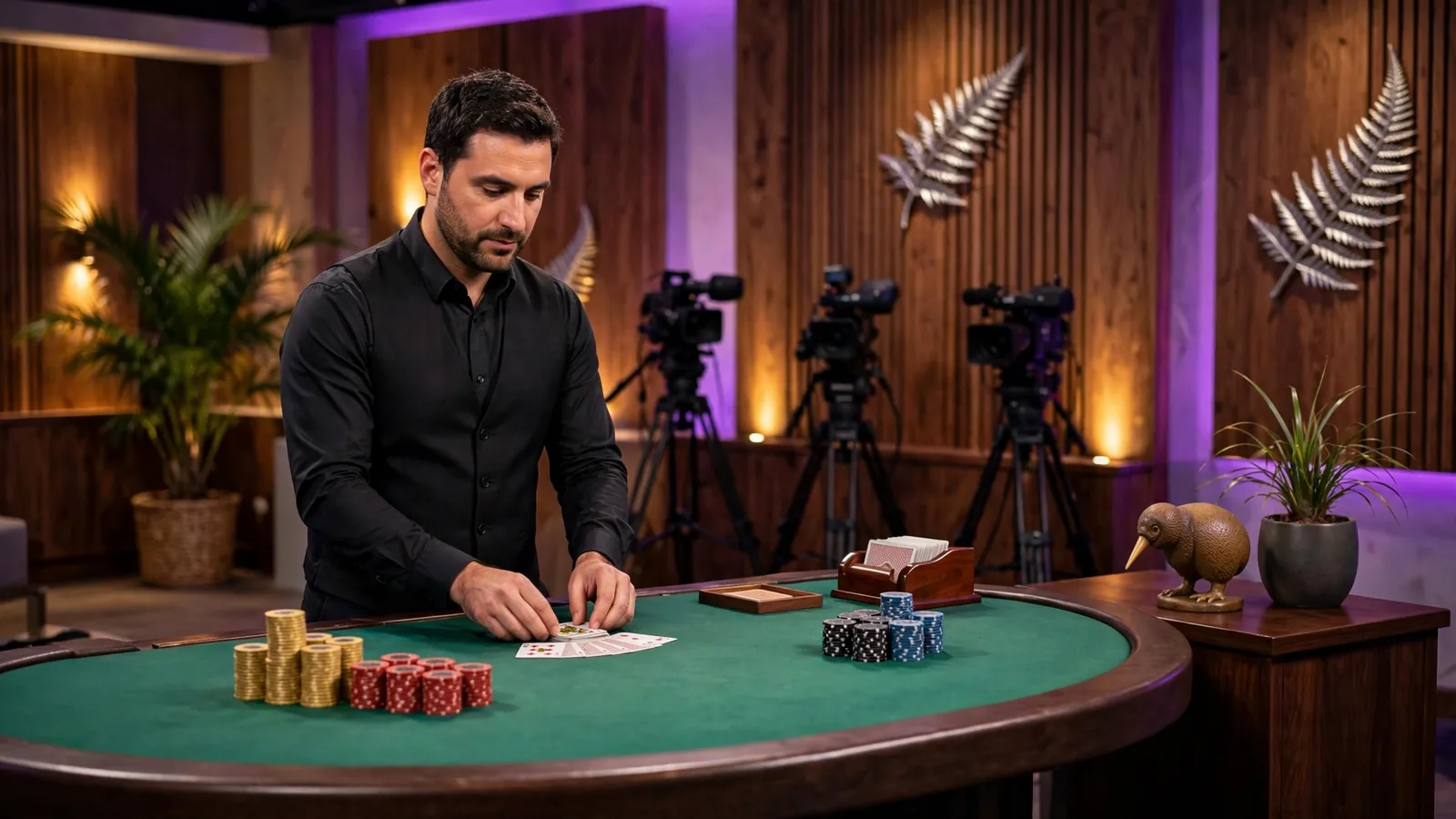
The live format depends on the broadcast representing an ongoing game, not a pre-recorded sequence. Participants can see the table activity as the round unfolds, and the format allows interaction with the professional dealer. That combination distinguishes live dealer roulette from a digital game that presents a virtual wheel without a real table being shown.
The online interface and the video feed serve different purposes. The feed conveys what is happening at the physical table; the interface provides the means to participate remotely. The experience depends on both being available together. A video of a roulette wheel without an interactive game would be only a broadcast, while a digital roulette interface without the live table would not provide the same live-dealer format.
What the stream represents
The visible wheel is not merely decoration around an independently generated animation. In live dealer games, real equipment is used, and roulette uses a real wheel. The studio broadcast makes that physical setting part of the online session. The stream lets participants observe the table and follow the game in real time, while interaction with the dealer takes place through the online format.

This does not mean that an online participant is physically operating the wheel or handling the equipment. The studio remains the site of the table game; the internet connection extends access to people watching remotely. The distinction is useful when describing live roulette online: “live” refers to a real-time video presentation of a physical game, not to a player being present at the casino table.
Professional studios are part of the delivery model for live dealer games. They provide a setting in which real equipment and professional dealers can be presented through a live feed. The specific appearance of a studio or the design of an interface may differ, but the basic format remains a physical table transmitted to an online audience. The central elements are the real wheel, the live video connection and the ability to interact with a professional dealer.
For online casino live dealer roulette, the broadcast is therefore more than an image accompanying a digital result. It connects remote participation to a real table in a professional studio. That structure explains what the live format delivers without confusing the stream with a practice simulation or with a purely computer-generated roulette game.

The Dealer’s Role at a Live Roulette Table
At a live roulette table, the dealer is more than a visual presence. The dealer conducts the round in real time, while players take part through the game interface. That human role distinguishes a live table from a fully digital roulette game, in which software produces the sequence without a dealer physically carrying it out.
The dealer’s central task is to manage the table’s sequence of play. In a conventional roulette round, this includes setting the wheel in motion, releasing the ball and overseeing the result. The dealer’s actions make the progress of the round visible as it unfolds. Players are not simply shown a final number: they can follow the physical process that leads to it.
Conducting a round in real time
A live roulette dealer works within a shared pace. Players make their choices while the table is open, then the dealer moves the round forward. Once the betting period has ended, the dealer carries out the spin and confirms the outcome. The order matters: the result follows the physical action at the table rather than appearing as an isolated digital event.

This sequence also gives the dealer a practical responsibility for clarity. The transition from one round to the next has to be apparent, and the result has to be communicated so play can continue. The dealer’s announcements and visible actions provide a reference point for what is happening. This is particularly relevant in an online setting, where players are not gathered around the same physical table.
The dealer does not determine which number wins. The wheel and ball produce the outcome; the dealer conducts the round and presents its result. That distinction helps separate the human function from the game’s chance-based result. A confident or engaging manner may shape the atmosphere, but it does not give the dealer control over the result.
Interaction without shared physical space
Live roulette enables real-time play against a real dealer, with the table broadcast from a studio or a casino based in a particular country. The interaction is mediated by the online game: players observe the dealer and table, while their participation takes place through the interface. It is not the same as speaking to a dealer across a physical casino table, but the human presence remains part of the round.

Dealers may address the table as a whole and respond to the flow of play. Their role is to keep the round moving and make its stages understandable, rather than to advise individual players on what to bet. The distinction between conducting and advising is important: a dealer’s comments do not supply evidence that a particular wager is more likely to win.
The experience can therefore feel more social than a fully digital game, but the extent of interaction depends on the table and its format. The presence of a live roulette dealer does not mean that every player receives individual attention. The dealer’s primary focus remains the shared table and the orderly conduct of play.
For players comparing live and automated roulette, the main difference is not a change in the underlying objective. It is the presence of a person carrying out the round in real time. The dealer provides continuity and a visible human point of contact, while the outcome remains determined by the roulette game itself.
Playing Live Roulette on a Smart Device
A live roulette session on a phone or tablet is shaped by the short interval between one round ending and the next set of bets closing. The table continues in real time, so the screen is not simply a menu that can be paused while a decision is made. Most live games allow only a limited time for betting, which gives each round a brisk pace.
The practical difference from a larger screen is how much information must be followed in a compact view. The wheel or table feed and the betting layout may share the display, while controls for selecting a wager occupy part of the same space. This makes it useful to distinguish the visual action from the controls: the feed shows the live round, while the betting area is where selections are made. The exact arrangement depends on the game interface.

For anyone playing roulette online with a live dealer, the betting window is central to the rhythm. A selection made after betting has closed cannot be treated as part of that round. On a smart device, switching attention between the table and the betting layout can take time, so the pace may feel more demanding than viewing the game without participating. The time limit applies to the game, not to the size of the screen.
A measured approach is to settle on a wager before the betting period is nearly over, rather than trying to make several changes at the last moment. This is a matter of managing the interface and timing, not a method for improving the odds. The roulette outcome is not altered by the device used, and a faster sequence of rounds does not provide evidence that any selection is more likely to win.
A smart live casino experience can therefore be understood as a compact version of the same live table, with the betting window setting the pace. The smaller display may make the controls and live action feel closer together, but the main constraint remains the limited time available to place a bet. A session can be easier to follow when attention stays on the current round and the betting controls, rather than moving between unrelated screens while the window is open.
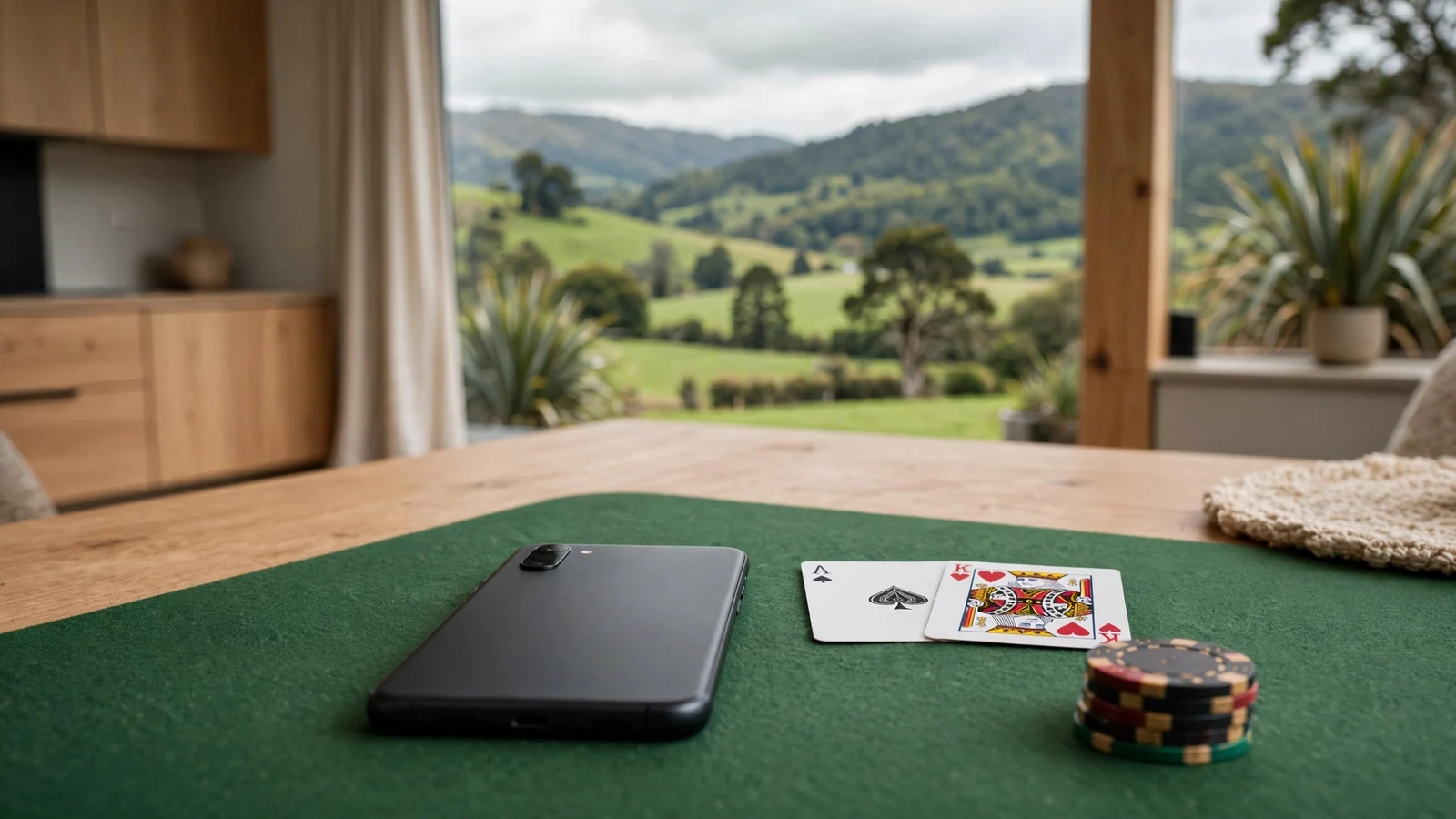
The phrase “live dealer roulette on a smart device” describes the format, not a separate kind of roulette. Whether the session is viewed on a phone or tablet, it remains a real-time game in which the betting period closes before the next result is settled.
Roulette Results, Systems and the House Edge
A sequence of live roulette results can show what happened at a table, but it cannot establish that a betting system has predictive power. A run of wins or losses may look meaningful after the fact; without evidence that the method changes the underlying probabilities, it is not evidence that future outcomes can be forecast.
The relevant baseline is the house edge: the statistical advantage built into the game over repeated play. For live European roulette, it is usually around 2.7%; for American roulette, around 5.26%. These figures describe the long-term mathematical position, not a promised result for an individual session. Short sequences can differ substantially from that expectation, and a player may finish ahead or behind it.

A live roulette system generally changes how bets are arranged or how stake sizes vary after results. It may organise a session, but rearranging bets does not remove the house edge. Nor does a recent result make a particular number or outcome more likely on the next spin. Past results are records of completed rounds, not signals that alter the wheel’s probabilities.
This distinction matters when assessing claims about a “best” live roulette approach. A method may appear successful in a selected set of results, especially if losses or unprofitable sessions are left out. A persuasive account would need to show the full record and a sound basis for concluding that the system changes expected outcomes. A short winning sequence alone cannot do that.
The same caution applies to online displays of live dealer roulette results. Their value is descriptive: they show recorded outcomes, where available. They do not, by themselves, validate a betting rule or demonstrate that a pattern will continue. Even a visible run of the same type of outcome does not establish a dependable trend.

The house edge is therefore a more reliable measure of the game’s mathematical structure than a system’s past performance. It does not predict the next result, and it does not rule out short-term wins. It does indicate that repeated betting remains subject to an advantage for the casino, whatever sequence of stakes is chosen. Claims that a live roulette system can turn result history into a dependable forecast require evidence beyond the results themselves.
European and American Roulette at Live Tables
European and American roulette are distinct live-table formats, and the clearest documented difference between them is the house edge. For live European roulette, the figure is usually around 2.7%; for live American roulette, it is around 5.26%. The higher figure means that, over the long run, the American format carries a greater mathematical disadvantage for players.
These percentages describe an expected proportion of wagers retained by the casino across repeated play. They are not a forecast for a particular session: individual results can vary, and a short run may end above or below the expectation. The figures therefore provide a basis for comparing the formats, not a prediction of what any one participant will win or lose.
Features a house edge usually around 2.7%, offering a lower mathematical disadvantage for players.
Features a house edge usually around 5.26%, resulting in a higher mathematical disadvantage for players.
The comparison is relevant when a table is labelled as European or American roulette. A shared live-video presentation does not make the underlying formats equivalent. The distinction lies in the game being offered, while the house-edge figures indicate how the two formats differ mathematically. A table’s name alone, however, does not establish every detail of its rules; the displayed game rules remain the appropriate reference for the specific table.
For someone comparing European roulette with an American live table, the lower stated edge is associated with the European format. That is a relative comparison, not evidence that European roulette is favourable in an absolute sense. Both figures represent a house advantage, and neither format removes the mathematical cost built into the game.
A live dealer roulette demo can also be described by its format, but the word “demo” does not itself identify whether the table follows European or American rules. The relevant comparison remains the rules and stated edge of the variant being demonstrated. A practice display should not be treated as evidence that a different roulette format has the same probability profile merely because its presentation looks similar.
The difference between the figures is substantial enough to matter when evaluating these two formats, but it does not establish that one will produce better results in every session. A single outcome cannot confirm or disprove the expected edge. The figures are useful for comparing the mathematical terms associated with each variant; they do not support a claim that a particular format will deliver a particular result. Thus, the sound distinction is narrow: European live roulette has the lower stated house edge, while American live roulette has the higher one.

Low-Stakes Live Roulette and Betting Strategy
Low-stakes live roulette can limit the size of individual wagers, but it does not change the table’s underlying advantage. The house edge applies regardless of whether the stake is small or large: for live European roulette, it is usually around 2.7%. A smaller wager therefore reduces the amount exposed on that spin, not the percentage advantage held by the casino.
A practical strategy should distinguish between controlling expenditure and improving the chance of a favourable result. Keeping wagers small can make losses on individual spins smaller in cash terms. It cannot make a roulette bet more likely to win, nor does it alter the house edge. The same distinction applies to a fixed-stake approach: it may make spending more predictable, but it does not turn the game into a favourable proposition.
The amount wagered over a session also matters. When play continues, each new wager adds to the total amount exposed to the house edge. A low stake played repeatedly is still repeated exposure; the small size of each bet should not be mistaken for evidence that the overall risk is negligible. There is no fixed session length or stake pattern that can be identified as a way to remove this effect.
For Kiwi players considering a live dealer roulette strategy, the most defensible use of a low stake is as a boundary on the size of each decision. That boundary can help keep the financial scale of play limited, provided it is not raised in response to losses or treated as a route to recovery. Increasing stakes after losing does not change the odds of the next spin. Nor does a previous run of results establish what the wheel will produce next.
- Use low stakes as a boundary on the size of each decision
- Keep wagers small to limit the cash impact of a losing spin
- Increase stakes after losing as a route to recovery
- Treat a low-stake approach as a way to remove the house edge
A low-stakes approach is therefore a form of exposure management, not a predictive method. It may reduce the cash impact of a losing spin compared with placing a larger wager, while leaving the game’s mathematical structure intact. The distinction matters because a strategy can shape how much is risked without changing the conditions under which roulette pays out. In live play, the presence of a dealer and a streamed table does not make those conditions different: the edge remains attached to the game, not to the size or presentation of the wager.
Live Roulette Apps: Practical Tips and Technical Limits
A live roulette app brings the table interface and video feed onto a mobile device, but it also makes the session dependent on the device and its connection. Specialist reviews report that live dealer games can encounter technical problems from time to time. That is a general possibility, not evidence that every app has the same faults or that interruptions happen at a predictable rate.
A practical approach is to check that the app opens correctly and that the live picture and betting controls respond before placing a wager. If the video freezes, becomes delayed or disappears, further betting should wait until the displayed game state is clear. Continuing to act on an uncertain screen can create confusion about whether a selection was accepted or whether the round has progressed.
Connection quality matters because the game is presented through live video while bets are entered through the interface. A weak or interrupted connection can make those two parts appear out of step. Closing other data-intensive activity and moving to a more reliable connection may help reduce local interruptions, but it cannot prevent problems at the operator’s end. Nor does a smooth-looking feed, by itself, establish that every action has been recorded as intended.
App permissions and device settings also affect usability. Sound may be muted, notifications may cover part of the screen, or power-saving settings may interrupt an active session. Reviewing these settings before play can reduce avoidable distractions. Keeping the app current may also support compatibility, although it does not guarantee uninterrupted service.
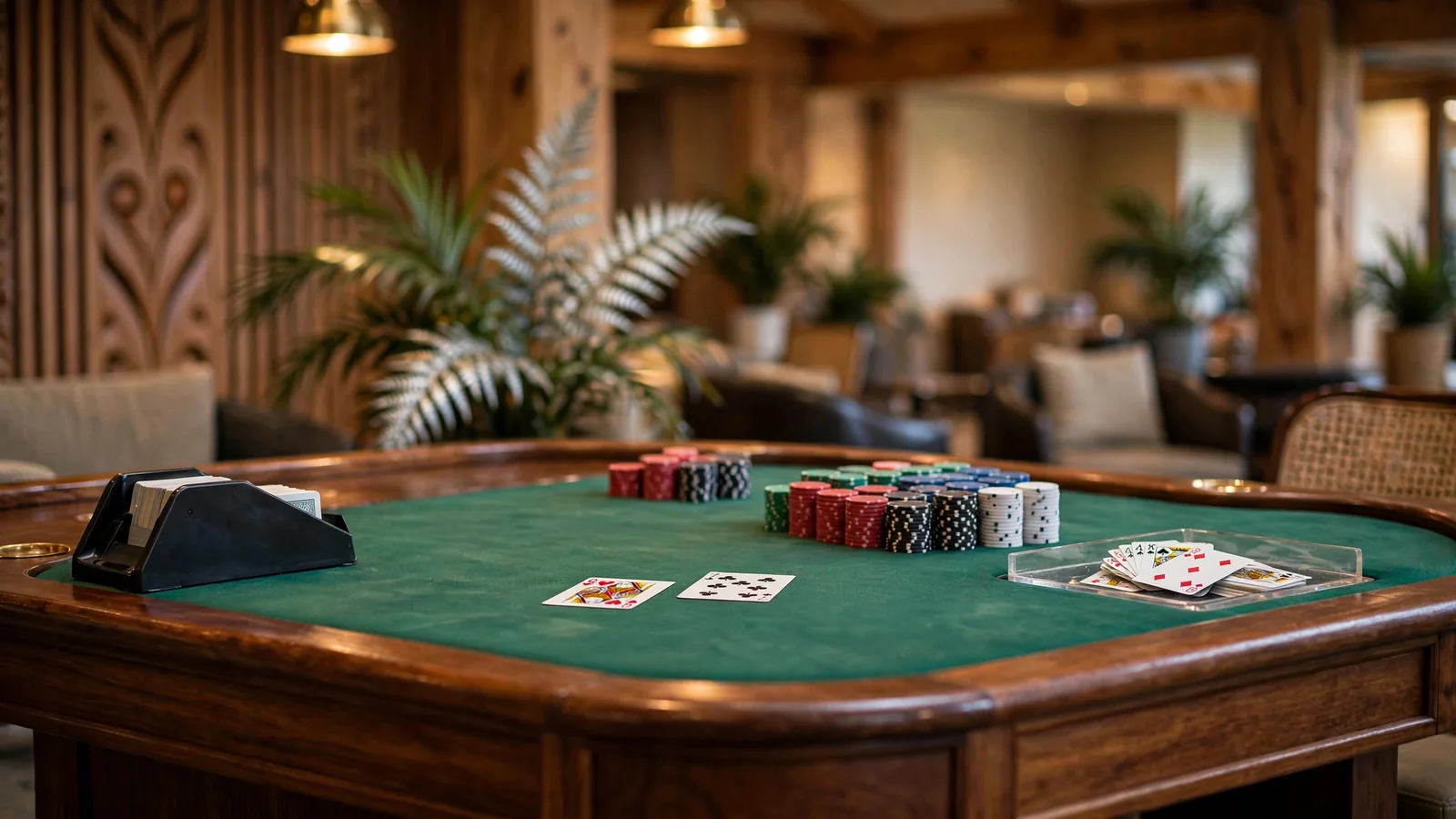
If a technical issue occurs during a round, the relevant record is the game history or account activity shown by the operator, rather than an assumption based only on what appeared on screen. The process for resolving a disputed round depends on the particular service, so the app’s help and complaint information should be available before play begins. These are operational precautions, not a way to improve roulette odds: technical readiness can make the interface easier to use, but it does not alter the game’s outcomes.
Can a Betting System Make Live Roulette Winnable?
No betting pattern can guarantee a win at live roulette. A system may prescribe how stakes change after wins or losses, but it does not alter the wheel’s odds or remove the house edge. A successful session is possible, but a sequence of favourable results is not proof that the system can produce the same outcome reliably.
The relevant house edge depends on the wheel format. Live European roulette has a house edge of around 2.7%, while the figure for American roulette is around 5.26%. These percentages describe the built-in mathematical advantage of the casino over repeated play; they do not predict the result of a particular spin or session. The higher figure for American roulette also means that a staking method cannot be assessed without considering which format is being played.
Systems that increase stakes after losses can make a losing run more costly, while systems that reduce stakes after wins cannot protect earlier gains from later losses. Changing the sequence or size of bets changes exposure, not the underlying edge. The same limitation applies to claims that a particular progression can make live dealer roulette reliably profitable.
Accordingly, “how to win” has no guaranteed answer. A player can win individual bets or leave a session ahead, but no betting system can ensure that result or make the game favourable in the long term. The house-edge figures provide a more reliable basis for assessing such claims than a system’s description or a short run of results.
Can New Zealand players play real-money live dealer games at offshore casino sites?
Yes. New Zealand players are not prohibited from accessing offshore casinos, including live dealer games. Choose a site regulated by a recognised gambling body, and check its New Zealand licence status with the Department of Internal Affairs.
Do live dealer games have a house edge?
Yes. Live European roulette usually has a house edge of about 2.7%, while American roulette is about 5.26%. In live baccarat, the edge is around 1.06% on banker bets and 1.24% on player bets.
How fast do live casino withdrawals arrive?
Crypto payouts often clear in under an hour. E-wallets and POLi typically take 24 to 48 hours, while bank transfers can take 5 to 7 business days.
Prepared by the Casino Adviser NZ editorial staff.