Live Blackjack in New Zealand: Rules and Play
 Available in US
Live tables pair streamed dealing with player decisions, while available actions and payouts depend on each game’s rules.

Table of Contents
- How Live Blackjack Tables Work
- Rules, Payouts and Side Bets at Live Tables
- Live Blackjack and New Zealand’s Online Casino Framework
- Live-Dealer Blackjack Compared with RNG Play
- What Free Play Can and Cannot Show
- Playing Blackjack Online Without Real-Money Stakes
- Live Blackjack on Apps: Streaming and Table Conditions
- Bitcoin Searches, Bonuses and Variable Table Rules
- Choosing a Live Blackjack Game Without Treating It as a Guarantee
- Card Counting in Live and Online Blackjack
How Live Blackjack Tables Work
Live blackjack is a contest between each player and the dealer, rather than a competition among players at the table. The aim is to finish closer to 21 than the dealer without going over that total. Reaching a higher total is not enough if it exceeds 21: the target is proximity to 21 within that limit.
A hand centres on decisions about whether to take another card or keep the current total. A player can hit to request another card, or stand to end their turn with the total already held. Hitting may bring the hand nearer to 21, but it also carries the risk of exceeding it. Standing avoids that risk from further cards, while leaving the existing total unchanged.
Other actions can alter how a hand is played. Doubling down means increasing the commitment to the hand while taking a more restricted course of play. Splitting separates a qualifying hand into two hands, which are then handled separately. Surrender, where allowed, ends the hand under that option’s conditions rather than continuing to seek a higher total. These choices are not necessarily available in every game.
Choosing a live blackjack site in New Zealand calls for checking the details that matter to your play, including licensing and payout information where available. This list offers a concise reference to the known details for each operator.
Payout speed: 1-3 business days Wintino lists a payout speed of 1–3 business days, a useful detail to consider when reviewing its payment information.
License: Curaçao Gaming Authority, licence no. OGL/2024/165/0185 BitStarz lists a Curaçao Gaming Authority licence, number OGL/2024/165/0185.
License: Tobique Gaming Commission, licence no. 0000002 Ricky Casino lists a Tobique Gaming Commission licence, number 0000002.
License: Tobique Gaming Commission, licence no. 0000064 Neospin lists a Tobique Gaming Commission licence, number 0000064.
License: Tobique Gaming Commission, licence no. 0000091 7Bit Casino lists a Tobique Gaming Commission licence, number 0000091.
License: Malta Gaming Authority, licence no. MGA/B2C/394/2017 N1 Casino lists a Malta Gaming Authority licence, number MGA/B2C/394/2017.
License: 07017519840 · Payout speed: 1-3 business days Zotabet lists licence number 07017519840 and a payout speed of 1–3 business days.
License: Malta Gaming Authority, licence no. MGA/B2C/370/2017 Play Grand lists a Malta Gaming Authority licence, number MGA/B2C/370/2017.
Payout speed: 1-3 business days Lamabet lists a payout speed of 1–3 business days, providing a stated timeframe to consider when reviewing its payment information.
The table’s rules determine which actions are permitted and when they can be used. A player therefore cannot assume that every table offers the same choices, or that an action available in one situation will be available in another. The decision is shaped both by the cards in the hand and by the rules governing that table.
In practical terms, a hand involves assessing the current position, choosing among the actions the table permits, and comparing the eventual result with the dealer’s. The basic objective remains consistent, but the available routes through a hand can differ. Understanding that distinction is central to how live blackjack works: the aim is shared across games, while the permitted decisions depend on the particular table.
Rules, Payouts and Side Bets at Live Tables
The card values in blackjack are consistent across live tables: number cards count at face value, while jacks, queens and kings count as ten. An ace can count as either one or eleven. Its value is therefore determined by which total is more useful without taking the hand over twenty-one. These values set the arithmetic of a hand, but they do not make all live games equivalent. A table’s rules affect the choices available and how a winning hand is paid.
The main actions are hitting, standing, doubling down and splitting. A hit adds another card; standing ends the player’s turn. Doubling down and splitting are also possible, but their availability and conditions depend on the table rules. Some games permit surrender, which is another rule-dependent action rather than a universal option. The action panel and the displayed rules should be read together: the buttons indicate what can be selected in a particular hand, while the rules describe the conditions attached to those choices.

An ace paired with a ten-valued card forms a natural blackjack. Its payout is not identical at every table. A specialist review reports that natural blackjack may pay 3:2 at some tables and 6:5 at others; those terms should be checked for the specific game rather than treated as a general standard. The distinction matters because the payout determines the return for that hand. A displayed table limit or a live presentation does not, by itself, establish the payout.
The same care applies to other rule details. The number of decks can differ, as can the dealer’s decision on soft 17—a total of seventeen that includes an ace counted as eleven. The dealer may be required to hit or to stand, depending on the table. Surrender rules and blackjack payouts can also vary. Specialist reviews describe these as differences between games, not as a single set of conditions shared by every live blackjack table. In practical terms, a game’s title or visual design is not a substitute for its rules panel.
A comparison of live blackjack tables should therefore focus on the conditions that change the hand or its settlement: deck count, the dealer’s soft-17 rule, whether surrender is allowed, and the payout for a natural blackjack. The permitted actions also deserve attention, especially if a decision depends on doubling down or splitting. Two games that look similar may not offer the same choices or pay the same way. No single rule detail should be read in isolation from the rest of the table’s conditions.
Compare Live Tables
- Check the payout for a natural blackjack (e.g., 3:2 vs 6:5)
- Verify the dealer’s soft 17 rule (hit or stand)
- Confirm the number of decks used
- Check if the surrender option is available
- Review the conditions for doubling down and splitting
Side bets require separate scrutiny. The term does not describe one uniform wager, and the core blackjack rules do not establish what a particular side bet covers or how it pays. Those terms must come from the specific game’s displayed rules. Insurance is a separate wager associated with the dealer’s up-card; it should not be treated as a routine action, and most players should avoid using it as a bet. A table offering additional wagers does not make them necessary to play the main hand.
For a live casino blackjack game, the useful distinction is between the familiar card values and the rules that vary by table. Card values determine the total; table conditions determine which actions are available and how outcomes are settled. This applies whether the game is presented as a single-hand table or as part of a wider live casino selection. The format label alone does not establish its deck count, payout, or surrender policy.
Where play involves real money, a budget should be set in advance and losses should not be chased. Bonus terms also require separate attention: blackjack may contribute differently toward wagering requirements, and maximum-bet rules may apply while wagering requirements are being met. Those conditions are not blackjack table rules, but they can affect how play is treated under a promotion. They should be checked in the relevant terms rather than inferred from the game’s payout display.

Live Blackjack and New Zealand’s Online Casino Framework
The legal position of live blackjack offered online in New Zealand is shaped by a transition from a market without domestic online casino licensing to a framework created by the Online Casino Gambling Act 2026. That distinction matters: the rules applicable to services operating during the transition are not the same as the arrangements expected once the full licensing regime is in place.
The Act came into force on 1 May 2026 and established New Zealand’s first domestic licensing system for online casino gambling. It does not make online casinos based in New Zealand permissible under the existing Gambling Act 2003; domestic online casinos remain prohibited. Instead, the new framework concerns the licensing and oversight of online casino services under the conditions set by the 2026 Act.
Before the new law took effect, online casino gambling supplied from outside New Zealand was not licensed or supervised by a New Zealand regulator. A customer using an offshore service in that period therefore had no domestic government recourse through an online casino licensing system. This historical position should not be confused with the framework now being introduced: the Act creates a route to domestic oversight, but the full regime is not expected to be operational until 2027.
The regulators’ distinct responsibilities
The Department of Internal Affairs is New Zealand’s primary gambling regulator and oversees regulation of the online casino licensing framework. Its role places the new system within the wider domestic gambling oversight structure.
Regulatory Roles
The Department of Internal Affairs oversees the online casino licensing framework, while the Gambling Commission handles applications, issues licences, and approves condition changes.
The Gambling Commission has a different function within that framework. It hears and determines casino licensing applications, issues online casino licences, and approves changes to licence conditions. The distinction is material: the Department provides oversight of the framework, while the Commission makes decisions on applications and licence conditions. Neither role should be inferred from the other, and a reference to a regulator does not, by itself, establish that a particular live blackjack service holds a licence.
The licensing system is being introduced in stages. The transitional window began on 1 May 2026 and runs until 1 December 2026. Services that were already being provided to people in New Zealand before the start of that window may continue operating during it, subject to the Act’s transitional provisions. This temporary permission is not equivalent to a completed licence, nor does it establish that every service available during the transition has been approved under the future regime.
The transition also sets a deadline for providers’ next steps. Providers that have not applied for a licence must stop conducting online casino gambling in New Zealand by 1 December 2026. Where an application is declined, the provider must cease all online casino gambling operations in New Zealand and leave the market. The full licensed system is expected to become operational in 2027, while unlicensed operation is expected to become an offence around the middle of that year. These milestones describe different stages; they should not be collapsed into a claim that the complete licensing regime is already operating.
What the framework means for live blackjack
Live blackjack is one form of online casino gambling, so its delivery does not place it outside the licensing framework. A live-dealer format may look different from a software-based casino game, but the regulatory question concerns the provision of online casino gambling, not whether cards are dealt in a studio or generated by software. The relevant legal context is therefore the provider’s position under the transitional provisions and, as the regime develops, the licensing requirements.
The transition also places restrictions on promotion. Providers are prohibited from advertising online casino gambling to people in New Zealand during the transitional period. Advertising by licensed operators is permitted under tight rules, while sponsorships are prohibited. These limits are separate from licensing decisions: an advertisement, or its absence, does not establish whether a service has applied for or received a licence.
Under the licensing framework, licensed operators must implement stricter age and identity verification systems. Providers operating without a licence may face enforcement action and fines of up to NZ$5 million. Those consequences apply to providers, not as a statement that a player is criminally liable merely for using an offshore website. The legal framework also does not make offshore access itself evidence of domestic approval or regulatory supervision.
For a live blackjack service, the central regulatory distinction in 2026 is consequently between transitional operation and operation under the full licensing regime. The Department of Internal Affairs oversees the framework; the Gambling Commission determines applications and administers licences and licence-condition changes. The transition permits certain pre-existing services to continue temporarily, but that permission has a defined endpoint and is subject to the Act. A service’s presentation as a live casino does not alter those institutional roles or the staged nature of the new system.
Legal Penalties
Providers operating without a licence under the New Zealand framework may face enforcement action and fines of up to NZ$5 million.
Live-Dealer Blackjack Compared with RNG Play
The main distinction between live-dealer blackjack and an online RNG game is how cards are dealt. A live table uses actual cards handled by a dealer, with play shown through a video stream. An RNG game instead uses software shuffles to produce its card sequence. Both present blackjack online, but the process behind the display—and the pace of play—differs.
A live stream can make the game resemble a casino table more closely than a software interface does. The cards are physical, and the dealer’s actions are visible as they happen. This format may therefore suit people who value seeing a real table rather than relying on a purely digital presentation. That resemblance has limits: the game is still being accessed remotely, and a stream can introduce delays between a table event and its appearance on screen.
RNG blackjack removes the live video and dealer from the process. Software shuffles the cards, and the game can proceed more quickly than a live-dealer version. There is no streamed table for the player to watch, so the experience is centred on the game interface. The faster pace is a defining practical difference, rather than evidence that one format is inherently more favourable than the other.
Pace and interaction
The live format depends on a sequence of actions at a physical table and on the video reaching the player. A streaming delay may affect how promptly a decision can be made or registered. This is not a change to blackjack’s underlying objective; it is a feature of how the game is delivered. The pace may feel less immediate than a software game, particularly when the stream or table action takes time.
RNG play avoids that particular dependence on video transmission and permits faster play. The interface presents the result of the software shuffle without showing a dealer handling cards. For someone comparing formats, the trade-off is therefore between a visible, physical table and a more direct software-based sequence. Faster play may be convenient, but it can also mean that decisions arrive in quicker succession. The format alone does not establish which pace is preferable.
These differences also affect what can be observed. In a live game, the cards and dealer are part of the stream; in an RNG game, the card sequence is generated by software. Neither display should be confused with a different set of blackjack fundamentals. The format changes the delivery and pace, not the basic nature of the game.
Table access and practical constraints
Live blackjack may require higher bets than RNG blackjack. That possibility matters when comparing access, since a table’s minimum stake can determine whether it is usable for a particular budget. It should not be assumed that every live table has a higher requirement, or that all software games are available at a lower one: conditions depend on the individual game. A comparison needs to account for the stated table terms rather than treating the format label as a complete description.
Uses physical cards and a video stream. Offers a casino-like atmosphere but may have streaming delays and higher minimum bets.
Uses software shuffles for card sequences. Provides a faster pace of play without the need for a live video feed.
Streaming is another practical constraint. A delayed feed can make the live experience less responsive, even though the cards are real. RNG play does not rely on a video stream, and its faster pace follows from software dealing. These are distinct trade-offs: live play offers a view of actual cards, while RNG play offers a quicker software-driven sequence. Neither feature, by itself, determines the quality of a game or its suitability for a particular player.
For live blackjack in New Zealand, the same distinction applies as elsewhere: live-dealer games use physical cards, while RNG games use software shuffles. The useful comparison is not a claim that one format is superior, but a clear account of what each involves. A preference for the visibility of a real table may have to be weighed against possible stream delays and higher bets; a preference for speed points toward RNG play, without implying that its outcomes are more predictable.
What Free Play Can and Cannot Show
Free play can make blackjack decisions easier to examine without attaching a real-money stake to each hand. Its clearest use is procedural: it provides a setting in which the available choices can be encountered and their immediate consequences observed. That can help distinguish a decision from its result. A hand that wins does not, by itself, show that the choice was sound; a losing hand does not prove the reverse.

The central options are hit, stand, double down and split. Hitting adds a card, while standing ends the player’s turn. Doubling down changes the decision by increasing the stake and taking another card; splitting separates a pair into two hands when the table permits it. Free play can therefore make the structure of these choices more familiar. It can show how a selection changes the course of a particular hand, but that observation is not the same as evidence that the same decision will produce a particular outcome later.
The distinction matters because a short sequence of hands has limited evidential value. Wins and losses in a small sample can reflect ordinary variation rather than a dependable pattern. Repeating a choice in free play does not establish that it is profitable, nor does a favourable run demonstrate a method for winning. The interface may record outcomes, but a record of what happened is not an explanation of what would happen across different circumstances.
Free play also cannot establish the conditions of real-money play merely by displaying blackjack decisions. A simulated hand may be useful for learning where an action is selected or how the hand proceeds, but that does not prove that every rule, payout or other table condition would match a real-money game. Those details need to be considered separately rather than inferred from the fact that the same basic actions appear.
A careful reading of practice results therefore separates three things: recognising the available action, understanding its immediate effect, and judging whether it is appropriate under a particular set of rules. Free play can assist with the first two. The third requires more than seeing a handful of outcomes; it depends on the conditions of the game and the reasoning behind the decision. Treating practice as a demonstration of guaranteed success would confuse familiarity with evidence.
- Use free play to learn available actions
- Observe how decisions change a hand’s course
- Use practice to become familiar with the interface
- Treat a win in free play as a guaranteed strategy
- Assume real-money payouts match simulated results
- Use a small sample of hands to forecast outcomes
The most defensible value of free play is limited but practical. It can provide a low-stakes way to encounter blackjack choices and notice how decisions shape a hand. It cannot establish that a choice will win, that outcomes will follow a pattern, or that real-money conditions will be identical. Practice is consequently best understood as exposure to decisions, not as a forecast of future results.
Playing Blackjack Online Without Real-Money Stakes
Online blackjack without real-money stakes can refer to more than one format. A game may be run by software, with cards shuffled through an RNG, or it may be a live-dealer table streamed online. The distinction affects the pace and delivery of play, even when no money is being wagered.
RNG blackjack uses software shuffles and allows faster play than live-dealer games. Decisions and card outcomes are handled within the software, without a streamed table and a dealer’s physical handling of cards. This format therefore has a quicker rhythm. A no-stakes version, where available, may let a player move through hands without waiting for a live table to deal.
Live-dealer blackjack uses actual cards and presents them through a video stream. Its pace depends on the table’s dealing and the online connection; streaming can delay the game. A free-play option should not be assumed to be available for every live table. Where it is offered, the play still follows the live format rather than the faster rhythm of software-shuffled RNG blackjack.
These differences matter when considering online play without a financial stake. A software game may be easier to access at a quick pace, while a streamed table retains the pauses associated with live dealing. The fact that a game is free does not, by itself, identify which format it uses. The game’s description or interface needs to make that distinction clear.
Nor does the label “free” establish that every feature matches a real-money table. A live table may have conditions that differ from those of an RNG game, and the online presentation can affect how quickly a hand progresses. A no-stakes game is therefore best understood as a particular mode of play, not as a uniform category with one delivery method.
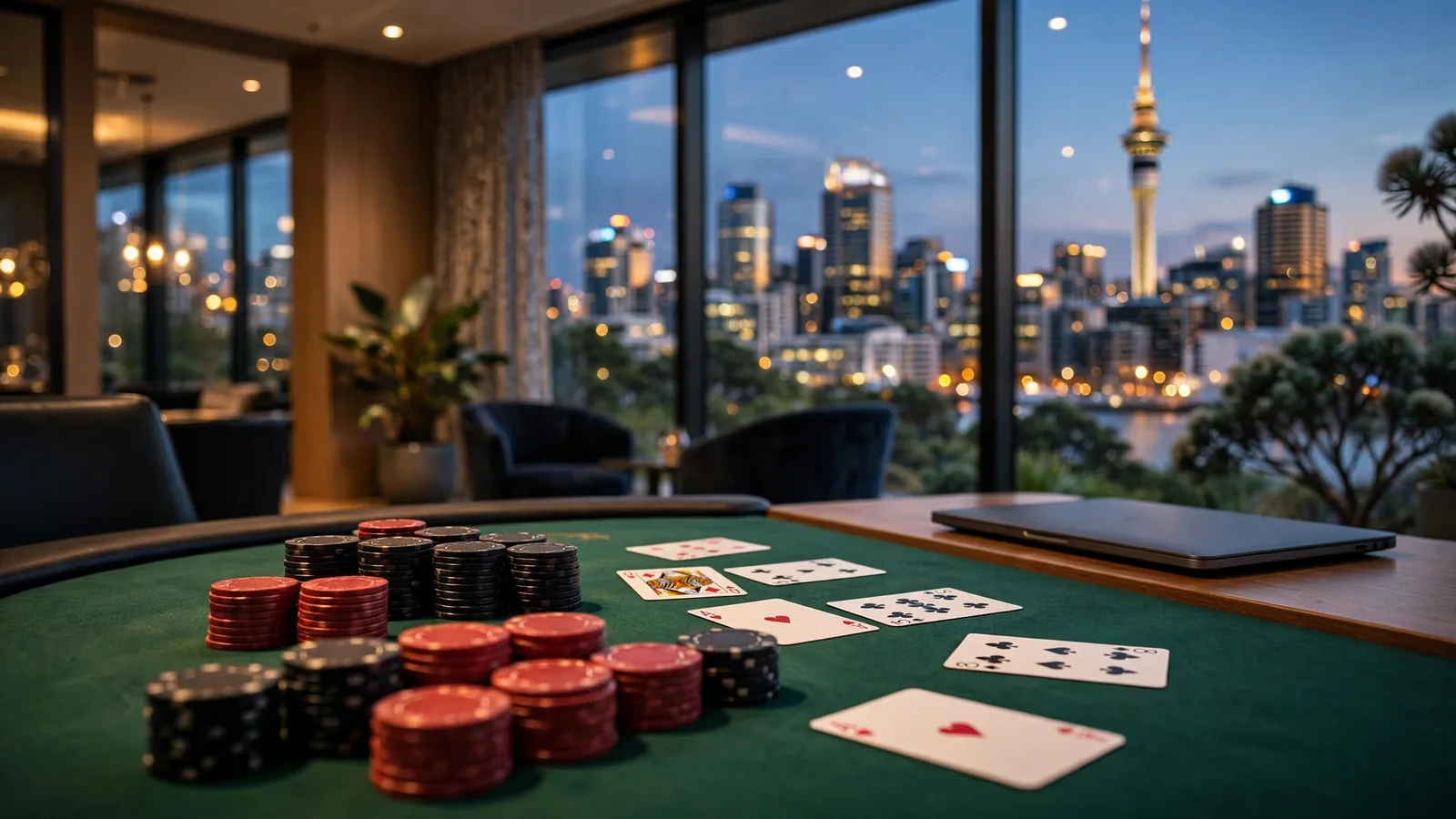
The difference is especially relevant when a preference is for the live-table experience rather than simply for blackjack played online. A live stream provides the dealer and actual cards, but it does not share the faster pace associated with software shuffles. Conversely, an RNG game can move more quickly but is not a streamed live table. These are distinct formats, not interchangeable labels for the same experience.
For online blackjack without real-money stakes, the practical distinction is thus between software-led play and a live stream. The former uses software shuffles and can proceed faster; the latter uses actual cards and may be subject to streaming delay. Whether a particular game offers a no-stakes mode is a separate question from how it deals the cards, so the format should be identified independently of the stake.
Live Blackjack on Apps: Streaming and Table Conditions
An app can provide access to a live-dealer blackjack table, but the format remains distinct because the dealer uses actual cards. The play is therefore presented through a stream of a physical table rather than generated solely by software. That feature may matter to players seeking a casino-table setting on a mobile device, although it does not by itself establish that a particular app or table is preferable.
The stream also introduces a condition that is not present in the same way at a physical table: transmission can delay what appears on screen. A delay may affect how closely the displayed action follows the dealer’s actions, so the viewing experience can depend on the stream as well as the table. The possibility of delay is a characteristic of live delivery, not evidence that every app performs poorly or that a specific service has a particular level of reliability.
Bet requirements are another relevant distinction. Live-dealer games may require higher bets than a player expects from other online blackjack formats. That possibility should be treated as a table condition, rather than inferred from the fact that a game is available through an app. The app interface alone does not establish the stakes or other conditions attached to a table.

For these reasons, identifying the best live blackjack app cannot be done from the format label alone. A meaningful comparison would require reliable information about the particular app and the specific table conditions it offers. The established features of live blackjack—actual cards, possible streaming delays and potentially higher bets—describe the format, but do not verify app-specific performance or establish a ranking.
The distinction is useful when assessing claims about mobile access. A live stream can reproduce the visual setting of a casino table, while still differing in how promptly the action reaches the screen and in the bets a table may require. Those are separate considerations: a physical-card game does not guarantee a delay-free stream, and a polished app presentation does not establish that its tables have lower stakes.
Accordingly, app suitability depends on information about the actual table and delivery, not on a general claim that one live format is inherently best. Without verified details tied to a specific app, conclusions about its performance would go beyond what the format itself can show.

Bitcoin Searches, Bonuses and Variable Table Rules
Interest in using bitcoin for live blackjack combines two separate questions: how a payment method is handled and what conditions apply at the table. The game itself does not establish whether a particular site accepts a cryptocurrency, nor does a bitcoin payment determine the rules of a blackjack hand. Payment availability and table conditions are distinct matters.
A live blackjack bonus is also separate from the game’s rules. Promotional terms can affect whether blackjack contributes to wagering requirements and can impose maximum bet rules while those requirements are being met. Those conditions matter because a bonus balance may be subject to restrictions that do not apply to ordinary play. The terms should be read in full before a bonus is accepted, with particular attention to blackjack’s contribution and any maximum bet condition. A bonus headline alone cannot establish how the promotion applies to live blackjack.
The table itself has its own conditions. A specialist review reports that games can differ in deck count, in whether the dealer hits or stands on soft 17, in whether surrender is permitted, and in blackjack payouts. These are not minor details that can be inferred from a game’s name or from the fact that it is dealt live. Two tables can offer the same basic game while setting different conditions for play.
Bonus Restrictions
Attention Blackjack may contribute differently toward wagering requirements, and maximum-bet rules may apply while those requirements are being met.
That distinction is especially important when a bonus and a particular payment method are considered together. A promotion may have wagering requirements, while the selected table has its own payout and rule structure. Neither set of conditions resolves the other. The applicable terms for the promotion and the rules displayed for the game therefore need to be considered separately.
No general conclusion about bitcoin availability or bonus suitability follows from the blackjack rules. A payment option, if offered, concerns how funds are handled; bonus terms govern the promotion; and table rules determine the conditions of the hand. Treating these as separate parts of the decision avoids assuming that a payment method guarantees access to a promotion, or that a bonus changes the table’s rules.
Choosing a Live Blackjack Game Without Treating It as a Guarantee
There is no single live blackjack table that can be identified as the best choice for every player. Variants differ in their rules, and those differences can affect both the strategy a hand calls for and the house edge. A table’s presentation or popularity does not establish that its conditions are more favourable.
A comparison therefore needs to focus on the rules applying to the game, rather than on claims that a particular table guarantees better results. A lower house edge, where supported by the rules, still represents a mathematical advantage for the house over time; it does not predict the result of an individual hand or session. Nor does a strategy remove the uncertainty inherent in gambling.
The table conditions also need to suit the player’s understanding of the game. A rule variation may change the sound decision in a given situation, so familiarity with one version should not be treated as proof that the same approach is appropriate everywhere. Claims about a “best” live game are incomplete when they do not explain which rules underpin the comparison.

Budgeting is separate from selecting a table, but remains central to limiting exposure. A set spending limit can help define when play ends; losses should not be chased by increasing stakes or continuing beyond that limit. No table choice or betting system can turn blackjack into a guaranteed source of income.
Card Counting in Live and Online Blackjack
Card counting refers to keeping a mental tally of cards that have appeared during play. In New Zealand, doing this through mental calculation alone is not illegal. That legal position should be distinguished from whether a method can produce a practical advantage: legality, by itself, does not establish effectiveness.
The format of the game matters. A live-dealer table uses actual cards, so cards dealt can be observed as the hand proceeds. That does not mean a count will be reliable or useful in every game. Table conditions vary, and the legal status of mental calculation does not guarantee any particular result.
Online RNG blackjack works differently. The cards are generated through software shuffles, and play can proceed faster than at live-dealer tables. A count based on cards seen in one hand may therefore have little relevance to a subsequent hand if the software reshuffles the virtual deck. Card counting should not be presented as an effective way to gain an edge in RNG blackjack.
The distinction is between observing actual cards at a live table and playing a software-shuffled game. Neither format makes a counting approach a guaranteed route to winning. Blackjack variants can also differ in rules, which may affect strategy and the house edge; a count alone cannot resolve those differences.
Accordingly, the narrow legal point is that mental card counting is not prohibited under New Zealand law. Claims about its practical value require separate evidence and depend on the game being played. For online RNG tables, software shuffles and faster play limit the basis for applying a count across hands.
Is card counting illegal?
No. Card counting using mental calculation is not illegal under New Zealand law.
Does blackjack always pay 3:2?
No. A natural blackjack may pay 3:2 or 6:5, so check the payout shown in the specific table’s rules.
Is insurance a good bet?
Most players should avoid insurance as a bet.
Created by the ”Casino Adviser NZ” editorial team.