Blackjack Odds for New Zealanders: How They Work
 Available in US
Hand totals, dealer position, table rules and payouts all affect how blackjack outcomes are assessed.

Table of Contents
- How Blackjack Hand Values Shape the Odds
- How Basic Strategy Changes the Odds
- What Perfect Play Can—and Cannot—Tell Us About Blackjack Odds
- Casino Blackjack Odds Depend on the Table Rules
- Winning Hands, Losing Hands and Streaks
- Online Blackjack Odds and Game Formats
- Using a Blackjack Odds Calculator for Aces and Hand Values
- Dealer Bust Odds and the Player’s Position
- Blackjack Payouts, Including 3:2 and 6:5
- Side Bets, Free Bet Rules and Deck Count
How Blackjack Hand Values Shape the Odds
Blackjack odds begin with a simple question: what total does each hand represent? Number cards retain their printed values, while jacks, queens and kings each count as ten. An ace is flexible: it can count as one or eleven, depending on which value keeps the hand within the game’s limits. These values determine how a hand is read, but they do not by themselves establish the chance of winning it.
The aim is to finish closer to 21 than the dealer without going over 21. This makes a hand total important in relation to both the target and the dealer’s position, rather than as an isolated number. A total of 20 is near the target, for instance, but the total alone does not state whether the player will win: the dealer’s hand and the cards still to be dealt also matter. A hand that exceeds 21 cannot meet the aim of finishing at or below the target.
The ace creates an important distinction between a hand’s current total and its possible readings. If counted as eleven, it may produce one total; if that would take the hand beyond 21, it can instead count as one. The same ace can therefore make a hand flexible without changing the value of the other cards. Describing a hand accurately requires taking that alternative into account, rather than treating every card as having only one fixed contribution.
Blackjack odds depend on the rules of the game, so it is worth checking the details at a casino before you play. This list offers a concise reference to the available operator information.
Payout speed: 1-3 business days Wintino lists a payout speed of 1–3 business days.
License: Curaçao Gaming Authority, licence no. OGL/2024/165/0185 BitStarz lists a Curaçao Gaming Authority licence, number OGL/2024/165/0185.
License: Tobique Gaming Commission, licence no. 0000002 Ricky Casino lists a Tobique Gaming Commission licence, number 0000002.
License: Tobique Gaming Commission, licence no. 0000064 Neospin lists a Tobique Gaming Commission licence, number 0000064.
License: Tobique Gaming Commission, licence no. 0000091 7Bit Casino lists a Tobique Gaming Commission licence, number 0000091.
License: Malta Gaming Authority, licence no. MGA/B2C/394/2017 N1 Casino lists a Malta Gaming Authority licence, number MGA/B2C/394/2017.
License: 07017519840 · Payout speed: 1-3 business days Zotabet lists licence number 07017519840 and a payout speed of 1–3 business days.
License: Malta Gaming Authority, licence no. MGA/B2C/370/2017 Play Grand lists a Malta Gaming Authority licence, number MGA/B2C/370/2017.
Payout speed: 1-3 business days Lamabet lists a payout speed of 1–3 business days.
Questions about the odds of getting 21 or receiving a card worth ten cannot be answered from card values alone. A ten-valued card may be a ten or a face card, but its value in the hand does not reveal how likely it is to be dealt. Likewise, the possibility of reaching 21 is not the same as the probability of doing so. To calculate a probability, the specific cards available and the game conditions would need to be known. A hand-value description tells what a dealt combination means, not how often it appears.
The distinction also matters when interpreting a question about the odds of a blackjack. The word can refer broadly to the game or more narrowly to a particular hand, so the event being counted must be clear before any probability is meaningful. A total of 21, a hand described as blackjack, and a win against the dealer are not interchangeable questions. The first concerns a hand total; the last depends on comparing the player’s result with the dealer’s.
Similarly, a comparison such as a player total of 11 against a dealer card of five identifies a particular situation, but it does not supply a complete odds figure. The card values explain what the two numbers mean. They do not specify the remaining cards, the exact event being measured, or the rules governing the game. A probability claim attached to that comparison would need those details.

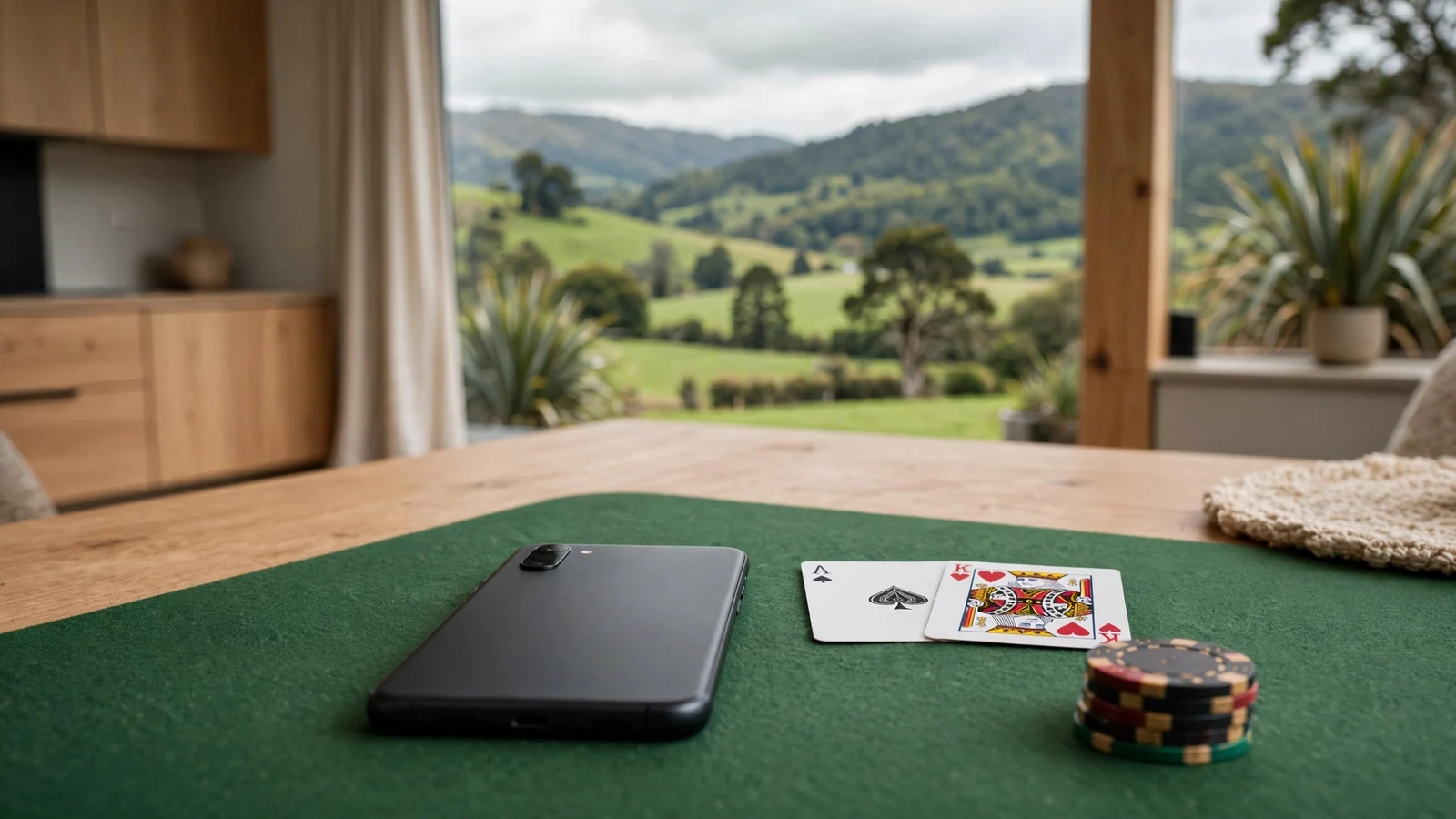
For the same reason, the odds of winning blackjack cannot be read directly from a hand’s total. The contest is against the dealer, and both sides’ final positions matter. Card values provide the basic language for describing those positions; they are not a forecast of the result. Keeping that distinction clear prevents a numerical hand total from being mistaken for a probability or a promise of a particular outcome.
How Basic Strategy Changes the Odds
Basic strategy is a method for choosing an action from the information available at a blackjack decision. It does not change the cards already dealt or guarantee a particular result. Its role is to make the player’s choices more consistent: rather than deciding by instinct, the player follows a recommendation for the situation at hand. This is why discussion of blackjack odds while playing basic strategy concerns decisions over many hands, not certainty about the next one.
The available actions are hitting, standing, doubling down and splitting. Hitting takes another card; standing ends the player’s turn with the current hand. Doubling down changes how the player proceeds after committing to a decision, while splitting treats a pair as separate hands where the rules allow it. These choices have different consequences, so a strategy must specify not only what a hand is worth but also which action is appropriate in the circumstances.
- Follow basic-strategy recommendations
- Match the chart to the specific game rules
- Assess strategy across repeated decisions
- Decide based on instinct
- Use a chart prepared for different rules
- Judge a decision by a single outcome
A basic-strategy chart organises those recommendations in a compact format. The player locates the relevant hand and the dealer’s visible card, then reads the action indicated at their intersection. The chart is not a prediction of the exact card to come. It is a decision aid: it compares the available choices for a given situation and points to the one the strategy recommends. Its usefulness depends on matching the chart to the game being played, since a chart prepared for different rules may not give the same guidance.
The distinction between a decision and its outcome matters. A recommended action can still be followed by an unfavourable card, and a choice that departs from the chart can sometimes turn out well by chance. Neither result, on its own, establishes whether the decision was sound. Basic strategy is assessed across repeated decisions, not by judging a single hand after its outcome is known. That makes it different from a system that promises a win or treats a brief run of results as proof of a reliable pattern.

The choices are also linked. A player who hits or stands is deciding how to continue or end the hand; doubling down and splitting introduce further choices that are available only in relevant situations and subject to the table’s rules. A chart therefore needs to represent more than a simple instruction to take another card or stop. Reading it as a set of conditional recommendations is more accurate than treating it as a universal sequence of moves.
Card counting is a separate practice from basic strategy. Basic strategy uses the current hand and the dealer’s visible card to select an action. Card counting involves keeping track of information about cards that have appeared and using that information to inform decisions. Mental calculation alone is not illegal under New Zealand law, but legality and strategic effect are different questions. The legal status does not establish that counting will improve results in every game, nor does it turn a basic-strategy chart into a counting system.

This distinction is particularly relevant when blackjack is played online. A player may consult a strategy chart or apply its recommendations mentally, but that is not the same as tracking cards. The format of a game can affect whether card-counting information is usable; basic strategy, by contrast, is a decision framework based on the hand and visible dealer card. Claims about how either approach changes outcomes should not be collapsed into one broad promise about better odds.
The phrase “blackjack odds with basic strategy” can therefore refer to a method of reducing avoidable decision errors, rather than a fixed result that applies to every game. A chart helps make choices repeatable, while the game’s conditions determine which recommendations fit. It cannot remove uncertainty from the cards, and it does not make every hand favourable. Its practical value lies in organising decisions, not guaranteeing an outcome.
What Perfect Play Can—and Cannot—Tell Us About Blackjack Odds
“Perfect play” sounds like a single standard against which blackjack odds can be measured. In practice, it is a conditional idea: a player makes the best available decision at each point, given the rules of the particular game and the information available at that moment. It does not, by itself, specify a probability of winning, a return, or a guaranteed outcome.
That distinction matters because blackjack is not one uniform set of conditions. Variants can change the rules, and those changes can affect both strategy and the house edge. A decision considered optimal in one version may not be optimal in another. Consequently, a claim about blackjack odds with perfect play is meaningful only when the game being assessed is clearly defined.
Perfect play is a conditional benchmark based on the rules of a specific game variant and available information; it does not provide a universal probability of winning.
Perfect play is also different from perfect knowledge of what will happen. Decisions are made before the outcome of a hand is known. Even if every choice follows an optimal method, that does not determine the result of any particular hand or remove uncertainty from a sequence of hands. “Perfect” describes the quality of the decisions under stated conditions, not control over the cards or a promise of success.
This limits what can be concluded from the phrase “perfect blackjack odds”. Without a specified variant and a defined measure, the phrase could refer to the chance of winning a hand, the longer-term financial expectation, or the house edge. Those are related but not interchangeable questions. A statement about one cannot automatically be treated as an answer to the others.
The question “what are the odds if you play perfect blackjack?” therefore has no single answer that applies to every blackjack game. A defensible estimate would need to identify the version of the game and the precise outcome being measured. It would also need a method suited to that defined situation. Without those conditions, a precise figure would imply a level of certainty the question does not support.
The same caution applies to the odds of being dealt a blackjack. Perfect decisions concern choices made during play; they do not, on their own, establish how often a particular starting hand appears. The probability of a dealt outcome and the effect of decisions made afterward are separate parts of an odds assessment. Treating them as one number can obscure what is actually being measured.

Questions about perfect-pair odds raise a different issue. A pair-based wager is not the same outcome as playing the main blackjack hand, so the odds for one cannot be inferred from claims about perfect play in the other. A meaningful assessment would have to specify the wager and the conditions governing it. Without that information, a numerical claim would be unsupported.
Nor does the phrase “more players” settle whether blackjack odds improve. The number of people at a table is not, on its own, a definition of the game or a measure of a player’s result. Any comparison would need to state what odds are being compared and under what conditions. A simple claim that a fuller or quieter table is inherently better would go beyond what the available information establishes.
Blackjack Switch presents another example of why labels are insufficient. It is a variant, and blackjack variants can differ in rules in ways that affect strategy and house edge. The name alone cannot establish its house odds or show how those odds compare with another game. A comparison requires the relevant rules and a clearly stated basis for measuring the result.
Perfect play is thus most useful as a conditional benchmark, not as a standalone forecast. It can describe decision-making within a specified game, but it cannot supply a universal probability, erase uncertainty, or make different variants directly comparable. Claims about optimal play should be read with attention to what is being measured and which version of blackjack is under discussion.
Perfect Play
- Optimal decisions depend on the specific game variant and its rules
- Perfect play describes decision quality, not control over the cards
- It cannot remove uncertainty or guarantee a win on any particular hand
- The phrase “perfect blackjack odds” is meaningless without a defined measure and variant
Casino Blackjack Odds Depend on the Table Rules
A casino blackjack game is defined not only by its familiar aim but by the rules that govern the deal and the dealer’s decisions. The number of decks, the dealer’s action on soft 17, whether surrender is available and the payout for a natural blackjack can differ between games. A specialist review describes these features as variable; its account should be treated as a description of the games it covers, not as a rule that applies to every casino table.
That distinction matters when comparing blackjack odds. Two tables can look similar while producing different conditions for play. The rules affect the possible outcomes and can alter both strategy and house edge. A general figure for casino blackjack odds therefore cannot describe every game unless the table rules behind it are also specified.
Deck count and the available cards
Deck count is one part of that comparison. It determines the composition of the pack or packs used in the game, and therefore the set of cards available as play proceeds. But deck count alone does not establish which table offers better odds. Other rules matter too, and no simple ranking follows from the number of decks in isolation.
This is also why a blackjack pair odds chart needs careful interpretation. A chart may address the chance of a particular pair under stated dealing conditions, but it does not by itself show the overall odds of winning a hand. Nor does it account for every rule that may shape play after the initial deal. Without knowing the deck setup and the scope of the calculation, a chart is not a complete comparison of casino games.
Soft 17 and surrender
A soft 17 is a hand total that includes an ace counted as 11. Whether the dealer must take another card or remain on that total is a rule that can vary between games. The instruction changes the dealer’s course of play in a defined situation, so it is relevant when assessing the conditions at a table. It does not, by itself, provide a complete measure of the odds of winning blackjack at a casino.
Surrender is another rule that may or may not be offered. Where available, it gives a player an additional option in a hand; where it is absent, that option is not part of the game. Its presence is therefore relevant to a comparison of strategy and house edge. The consequences of using it depend on the hand and the table’s terms, so its mere availability does not establish that one game is preferable overall.
Comparing games, not just labels
Payout terms also belong in a rule-by-rule comparison, because the return for a natural blackjack can differ between tables. The payout is not the same question as the probability of being dealt a natural, and neither figure alone captures all the conditions affecting a game. Detailed payout ratios are best considered separately from broader casino blackjack odds.
For a useful comparison, the table’s rules need to be read as a set: deck count, dealer action on soft 17, surrender availability and payout terms. Changing one condition can change the game’s strategic demands or house edge, while the combined effect depends on the full rules. A label such as “blackjack” is therefore not enough to infer that two casino games offer equivalent odds.
Determines the composition of the cards available as play proceeds.
Determines whether the dealer must hit or stand on a total of 17 including an ace.
An optional rule that gives the player an additional choice in a hand.
Specifies the return for a natural blackjack, such as 3:2 or 6:5.
Winning Hands, Losing Hands and Streaks
A blackjack hand is decided in relation to the dealer’s hand. The player aims to finish closer to 21 without going over it. Reaching a high total is therefore not, by itself, enough to establish a win: the dealer’s result also matters. A hand can finish without either side exceeding 21 and still be lost if the dealer is closer to the target.
This makes “winning odds” a description of outcomes across hands, not a guarantee attached to a particular total or sequence of actions. The odds of winning a hand cannot be read from the number of times a player has hit, or from the number of cards in the hand alone. Those details describe part of the play, but the result also depends on the dealer’s hand and the applicable table rules. A hand with several hits may win, lose or end without a win; the count of hits does not settle the outcome.
The same distinction applies to a hand made with several cards. Card count is not a separate condition for victory. The relevant comparison remains whether the player finishes closer to 21 than the dealer without exceeding 21. A calculation of the odds for a particular hand would need to specify the cards already dealt, the action taken and the game conditions. Without those details, a numerical estimate would suggest more certainty than the situation supports.
A player may hit, stand, double down, split or, where permitted, surrender. These options affect how a hand proceeds, but their availability does not establish a universal probability of winning. Surrender is especially important to distinguish from a completed contest: it is an option that may be offered under the table’s rules, rather than another way of finishing closer to 21 than the dealer. The exact terms depend on the game.
Streaks raise a different question from the odds of one hand. Winning consecutive hands is a sequence of outcomes, not evidence that the next hand is due to follow the same pattern. Nor does a prior run of wins establish a reliable probability for a future run. A defensible estimate would require a defined game, its rules, the conditions for each hand and a method for modelling the sequence. Without those elements, assigning odds to a run of ten or twelve wins would be unsupported. The same caution applies to claims about a losing streak.
Hand-by-hand results should also be kept separate from comparisons between tables. Rules can differ, and that can affect how a game is played and assessed; it does not turn a past streak into a forecast. A change in table conditions is a reason to evaluate that game on its own terms, not to infer that earlier results will continue or reverse.
For practical record-keeping, wins, losses and hands that end without a win can be tracked separately. Such a record describes what occurred; it does not establish a player’s future odds. Setting a budget before play and avoiding attempts to recover losses through further betting helps keep that distinction clear. Where play is subject to wagering requirements, blackjack may contribute differently from other games, and maximum-bet rules can apply during wagering. Those conditions concern the terms of play, not the chance of winning a hand.
Regulatory Compliance
Providers that have not applied for a licence must stop offering online casino gambling in New Zealand by 1 December 2026.
Online Blackjack Odds and Game Formats
Online blackjack can be dealt through a random number generator (RNG) or by a live dealer. The difference affects how cards enter the game and how quickly hands can be played, but the format alone does not establish which table offers the best odds. Those depend on the rules of the particular game; a European-style label, for instance, is not enough by itself to determine the odds.
In an RNG game, software shuffles the virtual cards. Play can move faster than at a live-dealer table because there is no physical dealing and streaming between hands. That pace changes how many decisions can be made over a period of play, not the value of any one hand. Nor does a software shuffle, by itself, show whether a particular game has better odds than another.
Live-dealer blackjack uses physical cards dealt at a table and transmitted to players by video. Its pace includes the dealer’s actions and the stream, which may introduce delays. A live game may also require higher bets than an RNG option, so the two formats can differ in practical access as well as presentation. The use of actual cards does not establish that live blackjack has better odds: the table rules remain relevant.
Searches for the best online blackjack odds often imply that one format is inherently more favourable. The available distinctions do not support that conclusion. RNG and live-dealer games describe how the game is delivered, rather than specifying all the conditions that determine its odds. A named variant, including European blackjack, must be assessed by its own rules rather than assumed to provide a particular advantage.

Betting progressions do not change whether a game uses software shuffles or physical cards. A system such as Martingale is a way of varying stakes, not evidence that the underlying blackjack odds have improved. Similarly, a calculator or odds tool can only be interpreted in relation to the game and situation it represents; its label cannot establish that a table is the best option.
The regulatory position in New Zealand is distinct from these game mechanics. The Online Casino Gambling Act 2026 took effect on 1 May 2026, establishing the country’s first domestic licensing framework for online casino gambling. The Department of Internal Affairs oversees that framework and remains the primary gambling regulator. The Gambling Commission determines casino licensing applications, issues online casino licences and approves changes to licence conditions.
The framework includes a transition from 1 May to 1 December 2026. Online casinos that were already serving people in New Zealand before the Act took effect may continue operating during that period under its transitional provisions. Providers that have not applied for a licence must stop offering online casino gambling in New Zealand by 1 December 2026. The full licensed regime is not expected to be operational until 2027.
This transition does not make game format a measure of regulatory status, and the legal framework does not alter the odds produced by a shuffle or table rule. Advertising to people in New Zealand is prohibited during the transition period. Any assessment of a game’s mechanics therefore remains separate from the question of how its provider is treated under the developing licensing regime.
Using a Blackjack Odds Calculator for Aces and Hand Values
A blackjack odds calculator is only useful when its inputs match the hand being assessed. An ace makes that especially important: it can count as either one or eleven, so the same cards may have more than one possible total. A calculation that treats the ace as fixed at one value can therefore describe a different hand from the one at the table.
Assessing Aces
Determine if the ace can count as eleven without taking the hand over twenty-one.
Label the hand as “soft” if the ace counts as eleven, or “hard” if it must be valued as one.
If several aces are present, count each as eleven only while the combined total remains within twenty-one.
When an ace can count as eleven without taking the hand over twenty-one, the hand is often called soft. If counting it as eleven would exceed twenty-one, it must be valued as one; the hand is then hard. This distinction affects how a displayed total should be read. A result attached to a total alone may not capture whether the ace can still change value.
A hand with several aces makes the point more clearly. Each ace can be counted as eleven only when the combined total remains within twenty-one; otherwise, one or more aces need to count as one. A calculator assessing a hand with multiple aces must account for those alternative values rather than simply adding eleven for every ace. The label “four aces” is not, by itself, enough to interpret an odds result: the other cards and the game situation matter too.
The phrase “blackjack odds calculator” can cover tools that calculate different things. One may report a hand total, while another may estimate an outcome for a particular situation. Those outputs are not interchangeable. To interpret a result, the entered cards and the question being calculated need to be clear. An estimate tied to a particular hand should not be treated as a general probability for blackjack.
The calculator does not change the card values. Number cards retain their face values, face cards count as ten, and the ace remains flexible between one and eleven. Its role is to organise the calculation for the specified hand. Without knowing the inputs and what the output represents, a displayed odds figure cannot be applied reliably to a different situation.

Dealer Bust Odds and the Player’s Position
A dealer bust means the dealer’s hand exceeds 21. That can decide a round, but it is not a result that can be assessed separately from the player’s position. Blackjack is a contest between each player and the dealer: the aim is to finish closer to 21 without going over. A dealer going bust therefore gives a player who has not busted a favourable outcome; it does not rescue a hand that has already exceeded 21.
The chance of a dealer bust is not one fixed figure that applies to every round. It depends on the cards involved and the conditions of the game. A probability stated without those details would give a misleading impression of what the dealer is likely to do in a particular hand. The same caution applies to broad claims about blackjack player odds: the dealer’s eventual total is only one part of the comparison, and the player’s own final hand matters as well.
This distinction is important when interpreting claims about dealer bust odds. A bust rate describes how often the dealer exceeds 21 under specified conditions; it does not, by itself, describe how often a player wins. A player can lose without the dealer busting, because the dealer may finish with a higher valid total. Conversely, a dealer bust does not determine the outcome for a player whose own hand has already gone over 21.
A dealer bust does not rescue a hand that has already exceeded 21; the player must stay within the limit to win.
The dealer’s role is therefore best understood as part of the hand’s final comparison, not as a stand-alone promise of a player win. Any numerical estimate needs a defined set of game conditions and a clear account of what is being counted. Without that context, a single figure cannot reliably represent the chances in an individual round. Blackjack outcomes remain dependent on both sides of the contest: whether the player stays within 21 and how the dealer’s hand finishes.
Blackjack Payouts, Including 3:2 and 6:5
A natural blackjack can receive a different payout from an ordinary winning hand. The distinction matters when interpreting blackjack payout odds: the relevant terms describe what the table pays for a natural, not the chance of being dealt one. A specialist review reports both a 3:2 payout and tables offering 6:5, so neither ratio should be assumed to apply at every game.
The ratios express the return relative to the original wager. At 3:2, the payout is three parts for every two parts wagered; at 6:5, it is six parts for every five. On that basis, 3:2 pays more for the same stake than 6:5. The difference concerns the value of a qualifying hand, not whether the hand counts as a blackjack.
The posted table terms therefore form part of the odds at blackjack. Two games can both recognise a natural blackjack while paying different amounts for it. A payout label should be read alongside the rules that define which hands qualify, rather than treated as a complete description of the game. Where the table does not clearly state its natural-blackjack payout, the return cannot be inferred from the game’s name alone.
A natural is distinct from a total reached through later play. The payout comparison applies to the qualifying natural, while other winning hands are settled under the table’s separate terms. This keeps the payout question separate from the probability question: a more favourable ratio does not establish how often a natural will occur.
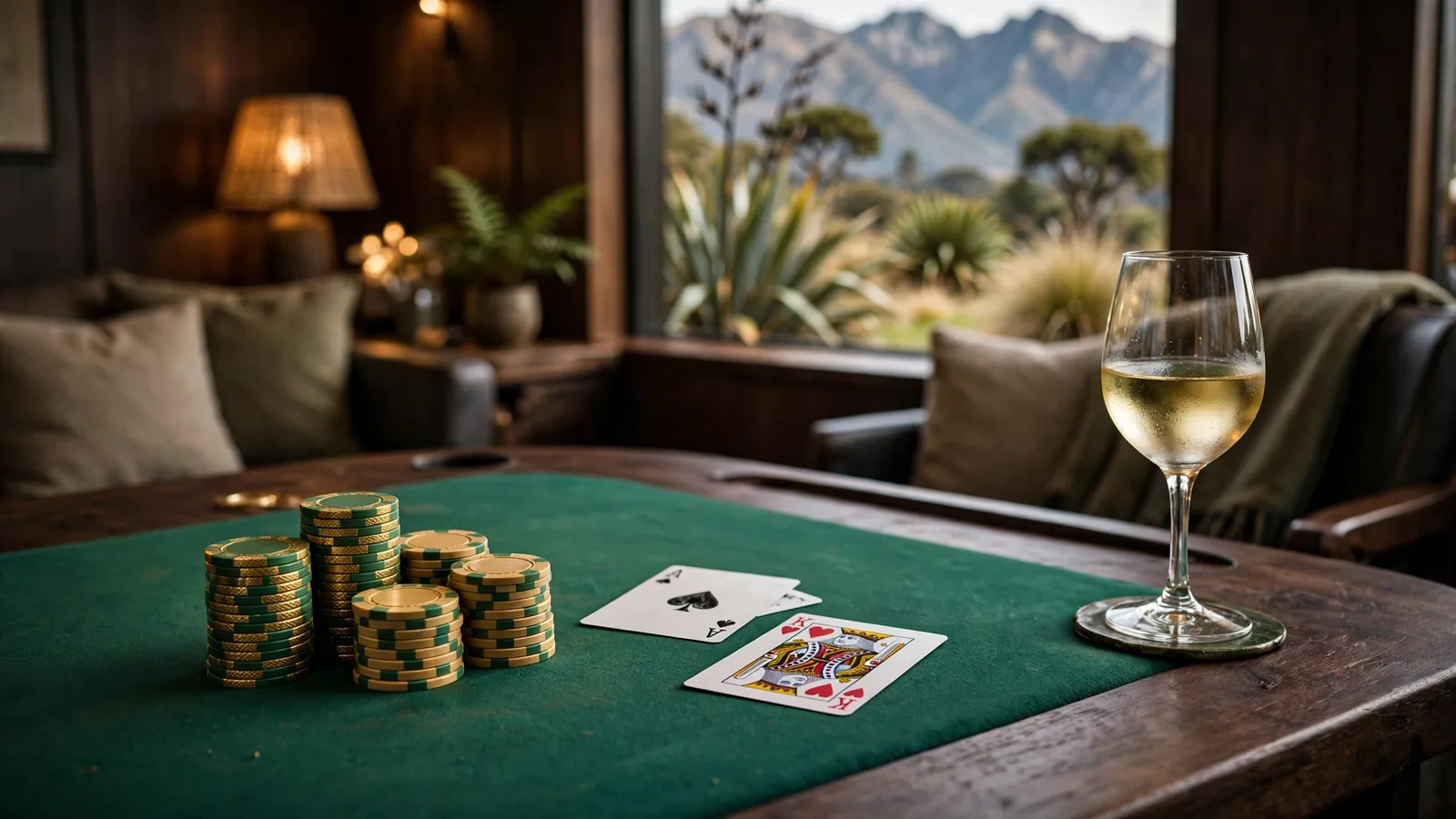
For a comparison of blackjack odds payout, the useful point is thus limited but concrete: 3:2 and 6:5 are not interchangeable. The former yields a larger return on the same wager, while the latter is a different, lower payout. Since table terms can vary, the ratio must be checked for the specific game rather than treated as a universal blackjack rule.
Side Bets, Free Bet Rules and Deck Count
Side bets and free-bet formats add conditions beyond the standard hand, so their odds cannot be inferred from the main game alone. A side wager has its own rules and payout terms; the chance of a qualifying result and the return for it need to be assessed separately. Without those terms, a numerical comparison would be unreliable. The presence of a side bet does not, by itself, establish that the underlying blackjack game offers better odds.
The label “free bet” also does not specify how a variant works. Its effect on the player’s position depends on the rules attached to it, which may alter the decisions available or the way outcomes are settled. A comparison with standard blackjack therefore requires the full table rules, not just the variant name. Blackjack variants can change strategy and house edge, but the direction or size of that change cannot be assumed from the label alone.

Deck count is another condition to compare, not a shortcut to a conclusion. A single-deck game is not automatically better for the player than a game using more decks. The number of decks operates alongside other rules, including whether the dealer hits or stands on soft 17, whether surrender is allowed, and how a natural blackjack is paid. A specialist review identifies these as rules that may differ between games; the relevant combination, rather than one feature in isolation, informs a comparison.
A useful assessment therefore separates three questions: what the side wager requires, what the free-bet rules change, and how the base game’s deck count and other conditions fit together. Odds attached to one feature should not be treated as a measure of the whole table. The rule set determines which decisions are available and can affect the house edge, while a variant name alone cannot establish a numerical advantage.
Can you beat online blackjack by counting cards?
Not in RNG blackjack: software shuffles the cards, so tracking cards that have appeared does not give the same information as in a game dealt from actual cards.
Does blackjack always pay 3:2?
No. A natural blackjack often pays 3:2, but some tables pay 6:5.
What is card counting?
Card counting means keeping track of cards that have appeared and using that information to inform your decisions.
Is card counting illegal?
No. In New Zealand, counting cards using only mental calculation is not illegal.
Created by the ”Casino Adviser NZ” editorial team.